 Free5:40:40

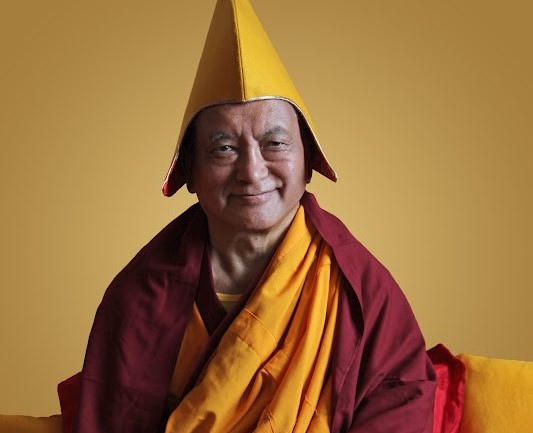
20100914 S1 LZR LOP There is nothing to hold onto
So you have done in English, so I’m going to do in Tibetan, the chanting of these verses, going to do the chanting of these verses. So that gives time to meditate, So this verse, which came from Diamond Cutter Sutra, came from Buddha’s holy speech, the end of the Diamond Cutter Sutra, this verse.
The previous one from one Vinaya teaching or something – I’ve forgotten the word – lung or something; not sure. So this I thought if this verse chanted slowly, then it gives time to mediate. So basically looking at the causative phenomenas, which means basically you recollect the specific objects, for you what are the main objects of attachment and anger and ignorance.
Remember those main objects, delusions, then like throwing atomic bomb on your enemy, delusions. Then instantly, instantly, instantly smash or what’s the word? So like the, I think maybe the George, during the George Bush’s father time, there was a war between the United States and what was it?
Iraq. Rinpoche: Iraq? So I saw in TV that missile coming from I don’t know – United States or wherever, very far, from very far, missile of United States coming from long way through the sky, and it is exactly aimed on the enemy army place. Exactly aimed drop of that.
So I don’t remember seeing afterwards, after it was destroyed but, anyway it’s like bomb thrown, everything become, everything’s totally made it… what do you call it? Pieces, disintegrated, everything made it into pieces, disintegrated. (RL) So you throw this one.
So here basically, there’s the eight, I think there’s maybe eight verses, I think.. No, eight verses, I think. So however, these, look at the causative phenomenas like a star. So basically it means your own life, there’s attachment to the I, the thought cherishing the I, there’s attachment to the I, then “my things”, ‘I” and “my things” to the aggregates, the base on which the ‘I’ is merely imputed, so aggregates, so there’s attachment to that.
There is also, I mean, concept of permanence, the I one does not realize, do not see it is the nature of impermanence, do not see that nature of impermanence – the gross and maybe even the subtle one, that it’s changing, that the I is changing even second-by-second – not only day-by-day, hour-by-hour, minute-by-minute, but even second-by-second it is changing.
even within second. The subtlest impermanence, so it doesn’t see that, so the concept of permanence. So then one’s own belongings and family members, the friends, the friends, enemy, all these things. So basically what usually the object of attachment, anger.
So then while the, while the I is, in Tibetan it says, when you analyze, cannot find, when you analyze, you can’t find. So must analyze what does it mean. That does, there are two things where it can refer to: the real I; I’m talking real I as real I that’s the language of the common people, common people in the world – we, ourselves, and the common people in the world uses.
But if it is described how does the real I appear to you, and how your mind believe the real I, that is the truly existent I, I existing from its own side, I existing from its own side, I exist by its nature existing from its own side, and truly-existent, so that I. So, of course that, I you can’t, that I – there is the hallucination of, there is the false I, this hallucination we have; then when you don’t analyze, when you don’t meditate, when you don’t have realization that it’s total hallucination, that is total non-existent, from its own side, when you don’t have that realization, then we let our, we allow our mind to hold on to this hallucination that this is true.
So when you look for, when you analyze, when you look for, can’t find that. This real I, if you look for, neither one-by-one, neither the form, aggregates of form is that, the form, aggregates of feeling aggregates of cognition, aggregates of compounded aggregates, then aggregates of consciousness, or one-by-one, none of those, none of that is the real I.
Even all together is not the real I; this real I can't find, can't find from the tip of the hairs down to the toes. The third, can't find anywhere can’t find anywhere on these aggregates, can’t find anywhere from tip of the hair down to the toes, nowhere you can find if you look for.
So that, neither on these aggregates nor on anywhere, nor anywhere can find. So what you discover is total non-existent, that is completely, totally non-existent. So if you look for, can’t find. When you are not analyzing ___ then, for us, haven’t realized emptiness, then we have, we let our mind hold on to this real I truly exist, so actually exist.
So it is proved by reasoning, it is totally non-existent, completely non-existent – it is proved there. We, not the god made us hallucinated, not somebody, not somebody made your, not somebody made you illusioned, made your mind to be illusioned, or to hold on this really, really exist or truly exist.
So that oneself, yourself made the mind, used the mind to hold on to this ‘really exist’, so that yourself made your mind to become the root of samsara. Not god or another god nor anybody not like that. So yourself, oneself did that. So that means this real I so what, what has been appearing, the way it has been appearing, even though it’s merely, even though what exists is what is merely imputed by the mind, but the way it has been appearing to one’s own hallucinating mind, the truly-existent, truly-existent.
So not only from this morning, not only from the birth, not only from this birth but from beginningless rebirth the I has been appeared to one’s own hallucinating mind in hallucination false, in hallucination, so existing from its own side. So like that, so in the reality, the I never came in existence, never exist from its own side even for one second, never came in existence even for one second, even for one second, never exist even one, never came in existence from its own side even for one second, never came in existence from its own side from beginningless rebirth, from beginningless rebirth.
It never, the I have been existing but never came in existence from its own side from beginningless rebirth, never existed that way from beginningless rebirth, never came in existence even for one second. That is how the I, so the I has been existing – there has been an I but it has been totally empty, existing from beginningless rebirth, but it’s being totally empty existing from its own side.
So that is how the I is now, and that is how it will be in the future. Never, also in the future, it never come in existence from its own side, not even for one second. Because the definition of the existence is, because the definition of the existence, so you have to think that, then what it means, why it never came in existence from its own side, from its own side even for one second.
So the definition of existence, there is, generally saying exist on the base, the foundation, base. The valid mind able to discover that, so valid mind able to discover that. So that’s the definition of existence, that’s how it is explained in, the abbreviated or the debating subject of the beginning of the study of philosophy.
So however here, that which is discovered by the valid mind, so however here why it can be, why the I can be discovered by the valid mind because so the, not only because, not only merely labeled by mind, not only that. Because, the reason not only that, that’s not the only reason that makes it to exist, it’s not that because all the things what we see in the dream, you win the lottery a billion dollars, in the dream you win the lottery a billion dollars, trillion dollars, or you found a beautiful friend – man or woman or however, you become the, president of the United States so anyway, so all that merely labeled by your mind, all that whatever in the dream, in last night dream you went around the whole world, you made a tour around the world,
whole world – east, west, around the whole world in last night’s dream, in the dream. Anyway, you went to Tibet, and you went to Afghanistan, you went to ____ place. So anyway, all those are merely labeled, same – merely labeled by mind, but just, but even yourself, after you woke up, you realize it was, what wasn’t true.
Even yourself, after you woke up, you realize it’s not true; it was a hallucination, it was a dream. So even yourself after you woke up, you realize. It’s all merely labeled by your mind. So here, even similar you are illusioned by a magician person.
So all the things, after the magician person illusioned the audience and then whatever the audience see, the things which is not there, which doesn’t exist, so all those hallucination, all those are merely labeled by your mind. Even the magician person him or herself has those hallucination, but if you don't believe but because you collected, due to the power of mantra, due to all the substances or whatever, those different methods, so you don't believe.
Anyway that, and then then due to the, so there are many things like this which are hallucination that magician person can transform whole entire city. I don't know what it is exactly but Pari Rinpoche mentioned, I've forgotten exactly name of the person who got invited, and the details of that person.
of the person who got invited, and the details of that person. I think it’s in Tibet, I think. So one person got invited by somebody met on the road I think outside, and that person invited. Then went to some wonderful place, some very beautiful, some beautiful what do you call it?
Beautiful house, and very kind of like exotic, I’m not sure – some very high place, was invited and then offered a meal; the other person offered him, offered a meal. So he had meal, everything. So he came back, and next time he went there, nothing is there.
All that exotic, all those things – houses and beautiful houses – all this didn’t exist when he went there second; he went there to see, but nothing there. So however, (RL) so whatever it is. So anyway so there are many merely labeled by mind, but do not exist.
So not, it exists but reason mainly not by that, then mainly because the valid base, valid base. So whether it has a valid base, so that’s what, the main one what makes it exist. So depending on the valid base, the aggregates, and then the I, so relating to that, reason because it exists – the aggregates, the valid base, the aggregates exist, so I is merely imputed by the mind, So that’s how it exists.
So it is something actualized, discovered by the valid mind, yes. If it is depending, relating to the valid base, the aggregates, then the ‘I’ is merely imputed by the mind. If it’s not like that, then there’s nothing to be discovered, by the valid mind that it exists, there’s nothing to be discovered by the valid mind.
So anyway, thinking this way how it exists, definition exists, thinking this way, then I exists because there’s a valid base and mind. A valid mind merely impute, the I’s, the valid mind merely impute the I, so that. So the I exists in mere name, so the I exists in the mere name, merely imputed by the mind.
So the ‘I’ is totally empty, the ‘I’ is totally, totally empty of the real I, by using the term that we, what common people in the world use, or what we use in daily life, or what believe real I, not merely labeled by the mind, existing from its own side.
So the I is totally empty of that, we have been believing all the time, twenty-four hours, twenty-four hours.
What we let out mind to believe twenty-four hours, and from the birth and the whole life, from the birth, the whole life, real I exists, real I existing from its own, side, from beginningless rebirth, from beginningless rebirth – not merely labeled by mind, but existing from its own side, so we let our mind to believe in the I, this from beginningless rebirth.
But never happened, the I never came in existence even for one second in reality, not even for existence came in the, never came in existence in that way, never exist even for one second, It has been empty, it has been completely, totally empty from beginningless rebirth up to now, and same from now on, forever, even forever.
Since the I exist, since it exist, empty from its own, empty, do, no existence at, no existence, no even an atom of existence from its own side – completely totally empty, empty. So like that, the aggregates, the aggregates one-by-one and the general aggregates, the same – all these appeared in hallucination, in the false way, in the wrong, false, because the way it appeared and reality is totally against each other.
So that’s the definition of ‘the false’. The way it appeared real one, and seems existing from its own side, and we have been believing all the time that way, but that never came. But in reality, never came in the existence even for one second. Never happened.
Never exist in the past, now or the future. So completely, totally empty from its own side. So that’s the reality. So totally, completely empty. So then, so same form, sound smell, taste, tangible objects; form, so all this here, this what you see – all the lights, ceiling and what you see, the (RL), the altar and offerings, the flowers, the holy objects, the flowers and carpets, then the people, so anyway all these colors, shapes, the form – all that, then appeared real one existing from its own side.
But this is total hallucination, totally false. Then we let out mind hold to this, and believe this a hundred percent true. However all this, in reality totally, this is totally non, all these are totally non-existent. The way it appeared to us and how we believe them are completely, totally non-existent, totally non-existent, empty.
Same, so that’s reality, that’s the reality. Same, sound waves appeared and how we have been, our mind have been believing __, all totally false. So again not..., existing from its own side, not merely labeled by mind, we think again. Here completely, in reality, completely, totally non-existent, totally empty.
So that’s the reality. Then again same form sound, smell, taste, tangible objects, all that’s same. So way, the way it has appeared and how we believe, they’re completely false, there’s no such thing in reality; the reality’s the total tong pa nyi, emptiness only. Tong pa nyi is ‘only’, tong pa nyi.
In English, I think there’s no emptiness…; nyi is not translated in English. But, of course, ‘emptiness’ it has been used, and of course, people who knew, it means that, people who knew. But I think in Sanskrit what it, shunyata, I don’t know whether the ‘ta’ is ‘nyi’, or not.
I’m not sure., shunyata. I don’t know whether it’s ‘emptiness only’ or not because I don’t know Sanskrit. But in Tibetan, it’s made very clear. In ordinary, the absence of, the ordinary, like when your purse is empty, when your purse, when you run out of money, or when your purse is empty, so absence of money, that tong pa.
That, we don’t call tong pa nyi, tong pa. Or when your stomach’s empty of food, so today’s a precept day, so no dinner. So the stomach might be empty. (RL) So anyway, maybe hungry. Anyway, so then that’s not called tong pa nyi; tong pa, but not nyi. So anyway, without taking much time, so these things – absence of form, so there’s the absence of form, absence of sound, absence of smell, absence of taste, tangible objects, whatever, the absence of the conventional truth, the, truth label.
So anyway, absence of that. So tong pa, but it’s not called nyi. So tong pa nyi, when you added nyi, then that is, means, when you add nyi, that nyi cuts, nyi cut the ordinary emptiness, ordinary emptiness, those examples what I mentioned before. Nyi cuts those, the ordinary emptiness, the examples what I mentioned before.
So the Tibetan made it very clear, tong pa nyi. From whom I found out this was Geshe Legden. the abbot of Sera Je who was unbelievable, his life’s dedicated completely the Sera Je, all the monks’ studies, like a father who takes, so much concerned, so much unbelievable concerned about the family, the children, like that, exactly like that, he so worried completely about the monks of Sera Je, their studies, their well-being.
So after fifteen days, he was appointed abbot, (RL) then he came to Kopan to see Lama. Then Lama was not there. So waited. He came in my room, and I was staying in this small room – there’s old gompa, a small room next to Lama Lhundrup, one small room, on corner small room.
So he threw dice, I had plastic big dice, big red plastic dice that I bought from Australia. So he threw on my table like that. (RL). He threw on the dice. Sorry, on the table, not on the dice. So he threw the dice on the table whether Lama will come or not.
If Lama comes, whether he will help or not. Anyway, so threw. Then, “Oh, quite good; It’s quite”. He threw them like that, then he says, “Oh, quite good. Then we waited. Then Lama asked to go around the.., he didn’t come to, didn’t happen to come to the United States, but I think went to everywhere where we had center – all the centers: Spain and Germany, France everywhere, Australia. So Lama asked him to, he went down to give teaching, and Lama asked to teach one year at Chenrezig Institute, then offer, I think, $100,000, Maybe that, I’m not sure.
So Geshe-la did that. He was resident teacher there for one year. So at the beginning, Chenrezig Institute could not find translator. Four months he didn’t have translator. So he didn’t have attendant, he didn’t have translator; no attendant, no translator.
He’s a senior geshe but didn’t have attendant, no attendant, no translator. So invited attendant. So during those four months, he didn’t have. So then I arrived there, I don’t know, after some time anyway. So he told me that. So was missing Sera unbelievable.
Not Sera, Tibet, but Sera, South India. He was seeing the houses there at Chenrezig Institute, he was missing so much. Then they found one boy in the street, the Dharamsala street, Dharamsala, (RL), His Holiness’ residence, residence where His Holiness lives, in the street found one boy who dropped from school, didn’t finish school, so found one boy in the street.
So he came to Australia, Chenrezig Institute, translate for Geshe Legden. Then that boy could not translate even ‘zopa’. ‘Zopa’ is patience. So he could not translate even ‘zopa’. He doesn’t know patience, the word __ ‘zopa’. So knew nothing of Dharma.
So Geshse-la, the subject is the Lamp for the Path to Enlightenment to teach the people in the center. So then Geshe-la has to teach him several hours today, several hours teach the boy. Then next day, then go down to teach the class. Then next day, again teach several hours to the boy.
Then go down, next day, go down, teach in the class. So like that, did for a long time, did many months. So the boy, of course, learned a lot, (GL) learned a lot during those times; he got incredible benefit. So like that put effort, put unbelievable effort, so there’s, so I don’t know, that boy, there was another, when I went there, there was another – whether that was the same boy or another translator, another Tibetan man, maybe the same, I’m not sure.
So he makes the food for Geshe-la, quickly he makes food, then set up on the table, then he run down; he put ___ on his shoulder, then go run down to eat food with Western students, down in the kitchen there. So Geshe-la, whatever food, he made, he put on the table, then Geshe-la eat that.
So like that, could live for months, for a long time. So then I heard all those stories. Sa at that time who was traveling with me was Thubten Yeshe. She’s America. At that time, she was American nun. She was traveling with me. So then we decided to make momo to offer (RL) to Geshe Legden.
So then, Geshe-la was, this side the kitchen, the other side, the sitting room. So I was making momos, so I didn’t know how to put salt, I mean, so I, normally I would just sprinkle salt over the stuff, so that was the meat momos, so just sprinkle on the meat like that.
So whenever I make momo for Lama, so when Lama goes to give talk in the city, like that, then I make momo in the house, usually evening food, many times the evening food, so I try to make. So usually the momos made by other people, they add liquid. There’s a liquid that when you buy it, liquid runs down.
That never happens to me. Also when Lama makes, that didn’t happen. So then Geshe-la was, Geshe Legden was watching from there. And he said, “Oh.” Anyway, he said he will make, but I said I will do. Then he saw me, how I was going to do, then he said it’s not like that.
So he said, “Put in the container, glass, a little bit water, salt, and then you stir. then sprinkle. Then later, the liquid comes”. So Geshe-la explained. Then I’ve been doing that. I tried to do that, but sometimes…. One time I made momo in Nalanda for the monks when Gen Jampa Tegchok was there. But I tried, but it didn’t come out; it’s still dry.
So I think my, I think the question’s something’s missing in my karma. (GL/RL). Not even the salt, I think. (RL) So anyway, my karmas to make flavor, liquid come out, that’s missing. So unbelievable did so unbelievably dedicated to others, I mean, monastery, of course, but even the centers, how he cares so much Chenrezig Institute.
So then finally I think got the fund what Lama says. So able to build the gompa, not the present one, the one before, the middle one. Before that, I don’t know who was there, but Before that, I don’t know who was there, but we did some fund-raising in Switzerland – Lama and Geshe Jampa L___.
There’s one teacher, monk from Sera Je who lived in Switzerland for many years. He used to give chőd initiation and Tara Cittamani initiation, things like that, at Lama Tsong Khapa Institute quite often, comes every year in Lama Tsong Khapa Institute.
He passed away. So Lama and him went, there are different, there where the Tibetan settlements, I mean, where they are. So they go one part, and Gonsar Rinpoche and myself, and Geshe Rabten’s disciple, __ Gonsar Rinpoche and myself, and __ Tulku, and then there was another lama, L__ Rinpoche, not Geshe Rabten’s, he’s not the disciple of Geshe Rabten.
So we went there to get a bag for donation, there where the Tibetan settlement, where the Tibetans are, so there are different places, in Switzerland, different parts, there’s Tibetans. So that was different. That was for the Sera Je gompa. But that’s the first time.
So when he came to Kopan, and he was staying in Lama’s room, and he was so worried about Sera Je monks, their study and their means of living. So he (RL) sometimes he expressed me that sometimes he was thinking to make money for them, to bring money for the monastery, for their study, for their living, so he says sometimes thought came, “Maybe I get married with a Western person.
Get married to bring money back to the monastery.” (RL) So worried. The teaching of the Buddha, preserving and all that, the monk’s living, all that. So anyway, so what I was saying, sorry I took a long time, so then Geshe Legden, so this, I heard from Geshe Legden when Geshe-la was giving the commentary on the dependent arising, the praise to Buddha having realized and revealed sentient beings the dependent arising.
So coming back, so tong pa nyi, so the Tibetan word is tong pa nyi. So nyi cuts all the ordinary emptiness, tong pa nyi __, so cuts all that. So it means, when I say the word, nyi, then it means only the emptiness of the truly-existence, emptiness of existing from its own side, emptiness of existing by nature, emptiness of the truly-existence, emptiness of the real one not merely labeled by mind.
So emptiness of that. So not, it’s not emptiness of money, it’s not emptiness of the money but it’s…; it’s not empty of money, it’s not empty of money but the money’s..; it’s not empty of.. Money’s not empty of money, but the money’s empty of the real money not merely labeled by mind.
Money’s not empty of money, but money’s empty of the real money not merely labeled by mind. Money’s empty of the money existing from its own side. So that’s why, while the money’s existing, it’s empty. While it is empty, it is existing – existing in mere name, merely imputed by mind.
While it is existing in mere name, merely imputed by mind, it is empty, it is empty of the real one, real money existing from its own side. So similar with the ‘I’. While the I’s totally empty, I is not empty of the I, but I is empty of the real I in the sense existing from its own side.
It’s empty of the real I not merely labeled by the mind, from the side of the mind. So like that, same. While it is empty, totally, completely empty, it is existing in mere name merely imputed by mind. While it is existing in mere name, merely imputed by mind, it is totally empty; it is unified of the emptiness and dependent-arising.
These two are unified on one object, for example, the I. These two are unified on the one phenomena, the I. So that’s why it is the middle, that’s why how the I exists is the middle way, devoid of the extreme, nihilism, and devoid of the extreme, eternalism, existing from its own side, so that.
So like this, like form is emptiness, emptiness is form. So similar, so showing you unity. Showing the form, while I it is empty, it is existing. The Prasangika school view – extremely subtle dependent arising, exist in mere name, merely imputed by mind.
And while it is existing, it’s totally empty – empty of the real form, not merely labeled by mind. So it’s totally empty of that. So there’s no emptiness other than form. There’s no form other than emptiness. So that’s showing the middle way view, devoid of the two extremes – nihilism and eternalism.
Nihilism – there’s no form exists. Eternalism – it exists, then it has to exist from its own side. Then you fall in eternalism. So devoid of those two. So from hell up to enlightenment, and samsara, nirvana, the hell, the cause of the hell, and enlightenment and then the whole path to that, and then samsara, the true suffering and the true cause of suffering – karma and delusion; and the true cessation of the suffering and the cause, and then what makes to achieve that –the true path.
So all that, is totally never, all this never exist; they never came in existence in the past from its own side; never exist from their own side in the past, now; same in the future. They’re total.., as I mentioned you what means ‘existing’, the way to think of existing that’s mentioned, so they’re totally empty, completely empty, from their own side, they’re completely empty – so empty of the real one, and not merely labeled by mind, existing from their own side –– they’re completely empty of that.
While they’re totally empty, they exist in mere name, merely imputed by mind, so that. So same in day-to-day life, happiness and problems, and the cause – the virtue and non-virtue, so they’re all, all these appeared to our mind something real one existing from their own side, but not merely labeled by mind, but actually, and anyway we let our mind totally believe, hold onto this real, true, it’s completely, a hundred percent true. But however, but all these are completely false; and the reality, they’re totally empty; totally empty of that, the way it’s appeared to you and how you believe – they’re totally, completely.. they’re completely empty of that – the whole entire phenomena.
So this, so while everything like that, then while everything like that, so all these appear to you existing from its own side, appear wrong way, false. Then you __ wrong, totally believe, a hundred percent believe they’re true. So then all these are, all these concepts become wrong concept, ignorance, not knowing the ultimate nature, ultimate very meaning, ultimate nature of the phenomena – not knowing that, not knowing that, completely hallucinated in that.
So all become wrong concept, the ignorance, the king of the delusions, the king of the superstitious mind, So just before I continue, just before continuing with this, what I started at the beginning was, so you search and can’t find. You search and you can’t find.
So this one, I mentioned the first one, okay? Now the second one, __, so when you look for, when you search, could not find. But also even the merely-labeled one, even the merely-labeled I, if you look for on these aggregates, if you look for, even the merely-labeled I, of course, the form is not that, the feeling is not there, the cognition is not that, the compounding aggregates is not there, the consciousness is not that, even all the five aggregates is not that.
So even the merely-labeled I, even the merely labeled I which exists, but if you look for from the tip of the hairs down to the toes, nowhere, nowhere on, but nowhere on these aggregates you find if you look for – even the merely-labeled one; even the merely-labeled one, if you look for, can’t find on these aggregates.
So that is another thing to know besides the first one. So that is another thing to know besides the first one. If you look for, can’t find. They’re the same thing – even the existing one, the merely imputed I. So if you look for it from the tip of the hairs down to the tip of the toes, nowhere you can find.
If it’s findable on these aggregates, then it becomes the same as rang-gyu-pa, the Svatantrika school view, if it’s findable on these aggregates. So then that means it exists from its own side. So I’m just giving you these for analyses. So what I’m saying is there’s two – it’s not only the first one.
After analysis, you can’t find –not only the first one. But you have to understand, whether the second one becomes analysis on emptiness or not, whether it’s analysis on emptiness or not, emptiness only, tong pa nyi, that is a huge question, that is a huge question because Lama Tsongkhapa mentioned in the lam-rim, in the vase, if you look for the vase, if you look for – not the truly-existent vase, not that – you never touch to that, the false vase, you never touch to that; the mere vase, without touching the false vase, the real vase, vase existing from its own side, vase existing by nature, vase, truly-existent vase, – without touching that, just general vase or the imputed vase, okay?
Just the vase, so you search where it exists, from top – where is it? you look, and at the end, you can’t find somewhere, you can’t find. So you can’t find. So then now, you check what happened the result. Okay, you could not find the vase, just general vase, the imputed vase, you look everywhere, could not find.
So then there’s nothing,, there’s nothing to recognize the vase, nothing to point out, “This is the vase”., you are falling in the, you are falling, you are falling in nihilism, destroying the..., destroying, like a house exists, then you, huh, what? Yeah, destroy.
House exists, but then you fall in nihilism, destroying the, destroying the dependent-arising. That also Lama Tsongkhapa mentioned. So actually, there are more words, but that’s the essence. So you are falling in nihilism, destroying the dependent-arising.
So this kind of analysis, you are supposed to analyze what doesn’t exist – the vase merely imputed on the valid base, the shape and all that thing,, kind of round, the belly, round shape, anyway, holds water, ___ function of that. So anyway, so that’s the valid base, then mind merely-imputed vase, mind has merely imputed the vase.
So then, mind has merely imputed the vase. So now, vase what exists is, it is what? It’s merely-imputed vase, what exists is merely-imputed vase, So therefore, you can understand, therefore, by this, from this explanation, you know the vase is empty, from its own side, vase is completely, the vase is completely, totally empty from its own side, totally empty, while it is existing, it is completely empty from its own side. But then right after the mere imputation of the vase, there is a hallucination projected on that; there’s a hallucination truly-existence decorated on the merely-labeled vase from, by your ignorance, not by God, not by somebody else, not your enemy, not by your enemy, but by your ignorance – left negative imprint on your mental continuum,
and that negative imprint decorated or projected truly-existence. So there is this, there’s this total hallucination decorated, projected – what do you call it – another word, anyway – on the merely-labeled vase. So that’ how made real, that’s how there’s appearance of real vase to you.
So without touch, so that is what you have to realize is empty, so without touching anything to that, then totally missed out; it’s like you missed the thief or the enemy, it’s like thief, the enemy is next to you, lives in your room, lives with you, next to you always, but you always think it’s outside, so you always target outside.
So this one, you think friend, this one you think the best friend, that’s whom trust completely. So the one who harms is, who steals your things, who harms, who cheats you, somebody outside. So that happened like that, then try to harm outside. Then you try to use your guns and your whatever, your guns or hammers (RL) outside.
So outside, but there’s no-one outside; it’s with you, whom you love and whom you believe totally friend, whom you totally trust. So anyway, so this, so totally missing this. So you miss out completely, what you have to analyze and realize empty is totally empty is missed out. And then you just, the general vase or the mere vase, and you look for.
Then could not find, but nothing to,, recognize it’s a vase. So now, through this analysis, what the result will be – so that is the interesting part – what the result would be from this analysis. It doesn’t come to the conclusion that the vase exists; it never comes to that because what you, because way you’ve been analyzing the vase itself, not the hallucin.., not the truly-existence on the top merely-labeled vase, not that.
So after analyzing where it is, could not find. Then that kind of destroys the, that harms, it harms, conclusion is it harms, come to understand the conventional truth, comes to understand the __, the existence of the vase, it harms to that. So that never happens.
So that’s why, __, you fall down nihilism, destroy the dependent-arising. So it’s very clear. Then there’s no vase; you can’t fill up vase with water. You can’t make vase, you can’t break the vase. There’s no vase, so there’s no breaking of vase. There’s no vase, so there’s no func..; vase doesn’t exist, there’s no function of vase.
So similar, there’s no I, there’ no all the activities of the I, there’s no all the experiences of the I, creating negative karma, creating good karma, experiencing happiness, experiencing suffering doesn’t exist, so it doesn’t exist. So there’s no I, you look for the merely-labeled I, general I, merely-labeled I, look on this, on the aggregates you’ve got to find.
So then it only harms, it harms to come to understand the existence of the I, that the I, existence of I. So that’s why Lama Tsongkhapa’s saying. Then I, then all the experience, there’s no I, there’s no activities of the I, then there’s no result – suffering, happiness. There’s no result happiness, there’s no hell, there’s no enlightenment, there’s no liberation, there’s no samsara, there’s no happiness, there’s no problems.
So then nothing exists. I don’t know whether there’s different types of zen, I don’t know whether there’s different type of zen meditation, but, I don’t know, but the general view of zen is nothing exist, Then you practice, then you become a zen yogi, (RL) zen yogini.
Anyway, so now here, so that, what effect, doesn’t come to the conclusion the existence of us, the existence of the I, never come, doesn’t help with that, Anyway, so now here, so that, what effect, doesn’t come to the conclusion the existence of us, the existence of the I, never come, doesn’t help with that, that kind of analysis doesn’t help with that, to understand, to realize at the end the conventional I, conventional truth of the I – I want to use the English word, the __, truth for the all-obscuring mind, truth for the all-obscuring mind.
The geshe, our resident teacher, geshe in Spain, Madrid center, he asked me that whether he can use because ‘absolute truth’, then he thought better to use ‘illusive truth’, then fits well; absolute truth, ‘illusive truth’. I think that sounds, I mean, very good to kind of, this, the truth for the absolute wisdom, and the truth for the all-obscuring mind, ignorance, so that.
So here,
and then if that is, if that becomes the just general I, the merely-labeled I or the vase, checking where it is on the aggregates, that it becomes ___, analyzing the ultimate truth, analyzing whether the, analyzing the truly-existent vase whether it exists or not, the truly-existent I whether it exists or not, even that becomes analysis on that.
Then another mistake’s that there’s four, analyses of the vital point,, and there’s four analyses of the vital point,. So the very first one is, the importance of recognizing the gak cha, object to be refuted, the I which doesn’t exist, I which doesn’t exist, the false I, as I mentioned already, so the mind which sees the aggregates, mind which sees the valid base, aggregates, and that mind merely imputes I, right after that second, and then the ignorance, past ignorance left negative imprint on the mind, decorated the, mental fabricate or decorate the truly-existence on that. So gak cha, so this is the gak cha, object to be refuted, what you have to realize empty or what you have to realize empty as it is empty, empty from its own side.
So this gak cha, object to be refuted, what you have to realize empty is not….. What you have to realize is not that the I doesn’t exist, that the I doesn’t exist –it’s not that. Something about the I to realize empty, something about I, so the hallucination, hallucination what is projected on the merely-labeled I, and that’s what you have to realize empty, that is what you have to realize empty as it is totally empty, as it is completely empty, doesn’t exist slightest even atom of that on the merely-labeled I; slightest even atom of that doesn’t exist.
So gak cha is that. So to win over the, so you receive a lot of harm from the enemy or thief, so you receive a lot of harm. So then you want peace and happiness, so you have to win over the enemy. So therefore, first, most import.., the very first thing, most, most important thing is to recognize the enemy or thief who steals your things or who always harms you.
So to recognize that’s, before you use your weapons, you have to recognize that. So that’s the most important thing. So similar here, what you have to, the emptiness, tong pa nyi, the I, what you have to realize is the empty of this truly-existence projected on merely-labeled I appeared from there.
So you have to realize that is, so that is the target, that’s your target, target to use logic, all the.. there’s so many logicians in Madhyamaka. The king of the logic is dependent-arising, logic of the dependent–arising, the I is non-truly-existent,, I doesn’t have truly-existence because it’s dependent-arising.
So that’s the king of the logic among all the logics, the dependent arising. So as I already mentioned many times, merely imputed by mind.
So before you use all the whatever, all the whatever, all the weapons, first thing’s to recognize – it’s the most important. So here, __, so from the four analyses, four analyses of the vital points, so the__, so the first one,, the vital points of the.., there’s the vital points of recognizing the object to be refuted.
So then you use all the logician logics on that, such as the __, so the logician of the, logic of the whether this, whether it’s one with the aggregates or whether it is exist separately from the aggregates, so that. So all those details. Because anything what exists, it has to be either with the aggregates or exist separately form that – so that’s the reasoning.
So however, then the __, the carriage? The seven types of reasoning, __. Rinpoche: Chariot, yeah. So there are, in the Madhyamaka and the Lam-rim Chen-mo, the Lhatong, the Great Insight, the there are many reasonings. So anyway, then you use on that.
So then, this, we can have no reason at all why you bring this first, object to be refuted, why Lama Tsongkhapa taught us how so important, the meaning of that. So then, many other mistakes will arise. So one resident teacher of our center, one resident teacher who is well-known, but I think he, I was asking this, checking just the vase without relating to the false vase, the gak cha, object to be refuted, without relating to that, so searching this, whether that is analyzing to the truly-existent vase, whether it become analysis on that.
So he said, “Yes, it becomes analysis to the checking the truly-existent vase.” He says, he said, “That is very commonly known in the monasteries. That’s normally known that that becomes analysis on the truly-existent vase.” So I said, “I want to see the text”.
So I said I wanted to see the text where it says that becomes analysis on the truly-existent vase. So then next day during the dinner or lunch, he said, “I checked all the texts but could not find.” So anyway, so there’s, I think that’s become sort of common, I don’t know, but I asked Thagpo Rinpoche, the ex-abbot of the Sera Mey at Buxa – he’s a great lama, great lama; he’s a holder of the many teachings and initiations, I mean there’s a great yogi, I mean, deity. However, so I checked with Rinpoche, and Rinpoche said for some people that it can become means of realizing emptiness; suppose some people can become, Rinpoche said. So however, but then Lama Tsongkhapa says a lot of contradictions to that. That way of mediating is not meditating on emptiness.
So there’s a lot of talks, a lot of talks. So that’s a danger to fall in, that’s falling in the nihilism. So anyway, I made clear, I made clear. Conclusion, it doesn’t help the existence of us – not at all, doesn’t help the..; it’s only destroying that.
So for example, so now the other one: the I is totally empty. You meditate the real I, the truly-existent I. Then you analyze that. It’s very interesting like this. When you believe, when you are believing the gak cha, when you are believing the truly-existent I, gak cha, the truly-existent decorated by the ignorance, by your ignorance on the merely-labeled I, then you believe, “This is the I”, then you believe, you let your mind to believe that this is the I.
“I has to be this”, that this is the I, this real one, existing from its own side. So now, while you’re believing, while this is your concept, then somebody criticizes you; then you get angry. while this is your concept, “This is the I”. You don’t have a recognition, realization or recognition the gak cha, and what doesn’t exist and what exists, __ what is labeled, what is merely imputed, what exists; what doesn’t exist is what is mentally fabricated on top of that.
So without the recognition of that, so you believe that’s the reality, that’s the reality. So this is reality, this is how the I is. So while your concept is that, somebody criticizes you, you get angry. But when your concept is according to the reality, that the I is merely imputed – total opposite concept – while your concept is merely-imputed, while your concept is that the I is merely imputed by the mind, and then somebody criticizes, while you’re thinking that, while your concept is that, while you’re thinking the I is merely imputed by mind, somebody criticizes, you don’t get angry.
somebody criticizes during that time, you don’t get angry. It’s impossible; Did anybody try that? (GL) Maybe should. (RL) Maybe on the weekend when you have more time, then go to a.., when you have more time, go to the persons whom you get angry or who get angry to you, who criticize you. So you go there and sit with that, sit next to that person, and then your mind in meditation, the I is.., not with this concept – the truly-existence decorated on the merely-imputed I – not that, without that concept, that’s normal one; that’s what we have been doing from beginningless rebirth – not that one, but now new one, which makes you to be free from samsara, oceans of samsaric, oceans of suffering of hell, hungry ghost, animal, human beings, sura, asura, intermediate state beings, and then
which ceases the cause – karma and delusion, including seed of delusion, which directly ceases that, and then of course,ceases, also directly ceases the subtle defilements with bodhicitta, collecting the extensive merits. With that, then able to complete the merits of wisdom, merits of virtue, cause of dharmakaya, rupakaya.
So with the meditation, the Prasangika school view dependent-arising, subtle dependent-arising, with the I’s merely labeled by mind, so existing in mere name, merely-imputed by mind, so with the awareness, then sit with person who criticizes to you, with the continuing meditation on that from your side, mind in that meditation, then listen what the (RL) person insults you or provoke you, or insults you, beats you, however. Anyway, so while your mind is in that meditation, in that, so thinking I but according to reality.
So I think it’s impossible to get angry while the mind is in that state. So I think it’s very good to try, very good to, when you think that, when the mind is in that state, in that meditation, in that understanding, suddenly, suddenly you don’t find any purpose at all to get angry back, to harm, mistreat. Suddenly, suddenly it’s no meaning, totally no meaning.
at all, doesn’t make sense, totally childish, it doesn’t make sense at all. So anyway, so it’s good to experiment, to try. So much of what we do in the life and all the expenses, also then there’s suing, court cases, then owing million dollars, millions of dollars spent, however, there are so many things, what you do with the concept, with this concept this is the real I, this, recognition I this way, real I, kind of mix with the gak cha, so the hallucination, the I is that, the reality this way.
In life, so much, I mean even Dharma, when you don’t use your mind thinking that way, you think different way, you change, correct way – merely-labeled by mind, then unbelievable, unbelievable, unbelievable so much in the life experience, all then no meaning, don’t make sense.
Then you find time, so much time for meaningful things to do. Then of course, there’s jealousness, pride, attachment because of this ignorance, truly-existent I, concept, but then there’s many other delusions. So then you offer that, you offer all those delusions, follow them the whole life. Imagine.
There’s no, and all this is not true, all this not true; that’s the belief – not true. The root what ignorance believes is not true, so how all the rest can be true? They developed afterwards, generated afterwards on the basis of this hallucination, truly-existent. Everything developed from that, all the other delusions, so how can it be true what they believe?
Cannot be true. So anyway so, now just the last conclusion, okay? So last conclusion, I think. So the real I’s, the I’s, real I’s – that I’s empty; you search the truly-existent I, the real I, then could not find.
Another one is because I guess, no worries they exist separately from that. So total __, so the I what you have been believing and something most precious, believing this, what you have been believing wow real, so precious, most important or precious or however, the truly-exists, this, a hundred percent it’s true, that you have been believing since beginningless rebirth, it has no beginning, this concept has no beginning, the ignorance has no beginning, this wrong concept has no beginning, so believing this up to now.
So what it’s been believing is the I, so this, what has been believed from beginningless rebirth up to now. Then completely, totally, totally, completely, totally, suddenly this is completely non-existent; there’s nothing, there’s no I to hold onto, there’s nothing, there’s no I to hold onto.
What you have been holding from beginningless rebirth, nothing to hold onto. So just like holding on this, real I. So suddenly, it doesn’t go anywhere, it doesn’t go through the door, windows, out through your nose, go out, then through the all the lower doors, door, windows or train station or some airport or something.
It doesn’t __ (RL) to… So just there, just there, we have been holding this from beginningless rebirth, but you realize there’s nothing, but suddenly you realize, discover there’s nothing there; it doesn’t go anywhere – just here. Suddenly you realize there’s nothing there.
to hold onto. Not that it goes somewhere else – not that. So the, maybe there’s projects,
there’s some material or something projects shadow, project and shadow of tiger or the something; something there – tiger or something, then shadow, but you don’t, but you do not recognize that, believing this. While the, believing there’s a real tiger, and then suddenly strong light, Then it just doesn’t, that tiger what you have been believing doesn’t exist there; doesn’t go anywhere –through the window or door, anywhere, but it’s not there- strong light, strong light, you see non-existent, as it didn’t, you see non-existent that is non-existent. You see that is non-existent right there, which you were hallucinating, which you have been believing before real, now not.
So like that. It doesn’t go anywhere- just there. Then suddenly you realize there’s nothing there to hold onto; there’s no I to hold onto. So that is the truly-existent I. So why you are feeling, why you get the feeling of losing I, why you get the feeling of losing I, so that is Kuetsang Jamyang Monlam, great bodhisattva, when there was danger at Tashi Lhunpo monastery, I think, something like that, you know water flood coming towards the monastery, and this bodhisattva was there outside, outside on the ground, so he wrote..
the water flood was coming towards the monastery, then he wrote on the stone, “If it’s true that I have bodhicitta, then the water flood run to, return back”. So he wrote on the stone, then turned the stone towards that water flood. Then after he turned the stone towards that water flood, the writing, then water flood that was coming to the monastery went away.
So he’s a great bodhisattva, Kuetsang Jamyang Monlam. So he said in his Mahamudra commentary that why you feel, why you are feeling losing I, that is because mind has been habituated form beginningless rebirth, believing the I’s truly-existent. So it’s proving that, it’s proving, it is showing, it is proving that there’s no truly-existence, there’s not truly-existence on the merely-labeled I, on the I, there’s no truly-existent on the I.
It is showing that. It is proving that. He said that, why you feel losing I.
So then you, with the, so it is most important, it is most important thing, it is a most important thing that to know, it is most important thing to know that, most important thing to have this knowledge that you must go through the fear, It’s like crossing a river to get to the other side where you wish to be, you cross the river.
So you have to go through the fear, you have to go through that, and then, then you’re able to realize emptiness. So that’s a very, very, that’s a very, extremely, very, very, very, very important knowledge. So when the fear comes, then fear’s not like ordinary fear – perhaps maybe deeper fear than you suddenly meet tiger or something; perhaps maybe deeper fear than that because this is a I that you have been believing, truly-existent I from, real I exist from one’s own side, you’ve been believing from beginningless rebirth, and now you realize it’s empty, now you realize it’s empty, discover. Then now, then only now, only, only now you see, you’re discovering your I; only now you are discovering your I, your self, only now you’re discovering your self, what is that.
So can imagine. So even higher bodhisattvas, I say – even lower bodhisattvas, less intelligent ones, less merit and less intell...., they get unbelievable fear than the higher intelligence higher ones. When they realize emptiness, unbelievable, unbelievable joy, incredible joy – tears come out, the hairs from the pores stands up, like that, and unbelievable joy.
Then the lower bodhisattvas, then unbelievable fear. So the knowledge, this is the most important thing that you have to go through, that you have to go.., you don’t’ stop, the meditation, the experience, you don’t stop the experience what has started.
So you must remember that time to go through the fear, then you win. then you win over the ignorance that have been cheated, that have been deceived you, that have been cheated you, that have been destroyed you from beginningless rebirth, that always tortured you, that always suffered you, never allowed to achieve enlightenment and liberation from samsara, all that, from beginningless rebirth. Now, if you go through the fear, if you go through the fear, complete the experience of losing the I, so let it to be, let it to be completely lost, completely.
I think with the nihilism, you can check but I, with nihilism, I don’t think fear rises. I don’t think a fear rises with nihilism. When you fall in nihilism, I don’t think a fear rises. Why? Why? The nihilism, then this, you kind of become philosophy, but there.., because nihilism, there’s no I, there’s no I.
It doesn’t harm because it doesn’t harm the ignorance, it doesn’t harm, it doesn’t do anything to the ignorance. It doesn’t harm the ignorance, doesn’t…, doesn’t harm the ignorance. That’s one thing. Search the I, search the merely-labeled I or the vase, then could not find, it doesn’t harm to the ignorance: that’s another mistake.
Why it’s not analysis, the checking the truly-existence, vase or the I, that doesn’t become meditation on emptiness. Why? Because it doesn’t harm the ignorance; it doesn’t do anything to the ignorance. Ignorance is there; ignorance is comfortable there.
(RL) Comfortably. Ignorance holding the I, real I existing from its own side is there – it doesn’t do anything, no harm to ignorance. If it harms the ignorance, then it becomes analysis, the meditation on emptiness, analysis truly-existent I. It harms it; it makes to see that it’s empty, doesn’t exist. So it harms ignorance.
So it harms the wrong concept, the ignorance, concept what, that believes that really true – it harms to that. So that one, that is another one that should understand. So what I say now to conclude. So let the I totally be lost. Go through the fear. So if one went through that, completed that, then you see the I completely and totally empty, totally empty.
Then you see the realize the object of ignorance, what ignorance has been holding, believing from beginningless rebirth up to now, so now you realize it’s totally empty, completely empty, completely, totally empty. So then now, it harms to the ignorance; it eliminates the ignorance; it harms to that.
So it’s like when the light came, then the tiger doesn’t exist. So then the ignorance is dispelled, ignorance believing, holding there’s a real tiger, so then it’s like that. Then that as a cause, realizing the I totally empty, completely empty, total loss.
There’s no even atom of that. So realizing completely empty there, then that as a cause, then the result, then the I, that the I’s not non-existent, that the I is not non-existent. It exists. As a result, what result comes in your heart. Then, I exist.
Not non-existent, but it exists; exists in mere name, merely imputed by mind. So that’s something unshakable, unshakable. That total realization’s unshakable. So then here, you realize the __, before you realize the absolute truth. Now here you realize what the geshe said ‘illusive truth’ or the ‘truth for the all-obscuring mind’. So the, whatever the all-obscuring mind, appeared to that, that it’s true to that.
So the truth for the all-obscuring mind, __.. So now you realize the second truth here. But Gen Jampa Wangdu, the great, one of my gurus, after Lama passed away, I came back to Dharamsala, I didn’t take His Holiness Song Rinpoche’s the Eight lam-rim commentary, Lam-rim __.
So I reached the middle, __, the middle capable long-life – sorry.. might be long-life initiation, long-life puja to His Holiness. So that early morning, then Gen Jampa Wangdu passed away. But the year before, he said one of his friend, Geshe Rabje, who is very learned and who had realized the fully categorized shiné, calm abiding, who has realized that, so passed away before His Holiness Dalai Lama’s long-life.
During those time, many, many lamas passed away; many high lamas passed away. So then this is the next year teaching, the long-life, the morning, then Gen Jampa Wangdu passed away. Before that, then I took this, the chu-len, the taking the essence, the flower, took the medicinal flower, so the pill which the twelve, 21 days, I think 21 days retreat, but I haven’t done that.
I thought in case it become rare in the future, then to have the lineage, so that. So even though many of our sanghas at that time, many did. Many they did 21 days, except one. I think it’s George, I think he could not. He has, somehow his body doesn’t fit to the fasting.
So some had very good success. I think Pemo was the best one, then maybe also Chődak also. However, Gen Jampa Wangdu, he said that after realizing something like him, then he said that after realizing emptiness, to see everything as illusion, for him, it took 15 days after realizing emptiness, then to see everything as illusion, –not illusion, but as illusion – there’s big differences. ‘Dream’ and ‘like dream’ – there’s a big difference.
So as illusion, took 15 days, that’s what he said. Now here realizing the I is totally empty from its own side, completely, and then that causes, that realization causes to conclusion that the I exists – exists in mere name, merely imputed by mind. The conventional, realizing this __, the truth for the all-obscuring mind.
So here, look at all the causative phenomenas, all those phenomena which I mentioned before, then your main object of the attachment, anger, this, ignorance. Then object of ignorance, concept truly-existent, object of those. Of course, everything is object of that.
Then what I’m saying is those particular objects where mainly attachment and anger, those. So then, __, so as I mentioned already, you ___ to your mind, all this I, object, action, all the phenomena is merely imputed by the mind, from the side of the mind.
So I’s, so therefore the I’s empty, action’s empty, all the rest of the phenomena’s – hell, enlightenment, samsara, nirvana, happiness, problem – everything totally empty, everything empty from their own side. That’s the reality. That the reality but the way, but they don’t appear to us merely labeled by mind.
What, generally saying, then until you achieve enlightenment, you have a hallucination, until you, unless when you are arya being, wisdom directly perceiving emptiness in equipoise meditation, that time that wisdom doesn’t have a hallucination. Otherwise, when you rises out of that meditation, then when you’re not in the equipoise meditation emptiness, then you have a hallucination, that – everything appear truly-existent until you appear enlightened, until your negative imprints, subtle negative imprints purified because the truly-existent appearance comes from that, projection from the imprint.
So that’s why you have this hallucination until you achieve enlightenment. So therefore, so everything’s merely imputed by your mind, by the mind, by your mind, like this, so they’re all totally empty, you are empty, your actions are empty, all the objects are empty from its own side, totally, empty, totally empty – no slightest even atom; do not exist from its own side, but from the, but the negative imprint left on the mind by the past ignorance decorated truly-existence on the I, on the merely-labeled I, on the merely-labeled action, on the merely-labeled all the phenomenas.
So then made everything real to you; then everything appeared real to you, existing from its own side, with his hallucination, total hallucination, total hallucination, and then you, we use our mind, we made our mind to think this way, let it, let the mind to hold, to believe everything’s true.
We let our mind to believe everything’s true, a hundred percent true – the truly-existent I, truly-existent action, truly-existent everything, truly-existent hell, truly-existent enlightenment, truly-existent samsara, nirvana, everything, truly-existent problem, truly-existent happiness, everything.
So we let out mind, we think, we let our mind to think this way, which is root of the, which becomes root of samsara, root of all the sufferings, root of, from where death, from where rebirth comes, from where sickness comes, from where old age comes, from where rebirth, from where the death comes, from that, from the ignorance.
If you have some sicknesses, whatever, pains, whatever you have, so where it comes, root from where it comes – I mean I can’t say everybody’s like this but many of us like that, So now look at all the phenomenas like star. So now, meditation is antidote to this.
So those who realized emptiness, and especially arya beings, arhats, and arya bodhisattvas and buddhas, they see you, your I completely empty, totally empty. What appears to you, what you believe is something truly-existence, but what they see you is, the reality, what they see you, your reality completely empty, and your aggregates, they see your aggregates completely, totally empty right there – nothing slightest exists from its own side.
They see form what you see, as I described before, real from its own side you believe, completely empty. So same – sound, smell, taste, the whole entire phenomena – ___ object and the mind perceiving, they see compl.. – you see real, believe real, but they see all this totally empty, completely empty of the real, total non-existent from its own side.
So that’s what you meditate, that’s what you need to meditate. Look at all the causative phenomenas like star, particularly by thinking those examples I mentioned, phenomenas – totally empty. So maybe a few seconds meditation on this. Only a few seconds (GL).
The time in the
daytime, you don’t see a star. Use that as an example. Then like a defected view, __, defected view, causative phenomena’s like that; so it means relating to the truly-existence. So the defected view, if you believe they’re real, then you get into problems.
So these causative phenomenas appear truly-existent, and you believe, then that makes you continuously die reborn, suffer, experience suffering of the whole entire samsara endlessly – not only, besides beginningless, endlessly. So that’s what the effect, great danger. So the greatest danger, greatest danger to you.
So this appeared truly, appeared something real existing from its own side, not merely labeled by mind, by looking at them as like defected view, __, so not true, all this not true, empty. __, so these causative phenomena’s like butter, like mar, butter, me is the butter lamp.
So butter lamp exists by depending on many, many causes and conditions – the people who make and the materials, so many things – then they exist. So these causative, all these causative phenomenas – your, my ___, and the I and the aggregates, and then belongings, all the belongings, and family, friends, enemy, stranger, all these things, it depends on so many causes and conditions.
So depends on so much cause and conditions, so they’re under the control of that. So that’s why they’re nature of impermanence, change, nature of impermanence. So depend on so many causes and conditions, so they’re not.., do not exist, they don’t exist, they’re not permanent, they don’t exist alone with its own freedoms.
Then like illusion. So again that refers to there are many hallucinations, but especially it refers to the truly-existence – truly-existent I, action object, all the rest of the phenomena, so this is like illusion – do not exist, they’re do not exist, they’re totally empty,
nothing definite. So all these causative phenomena I mentioned before like the drop, like water dew; their nature impermanence, can be stopped any time.
So it is, you can do at the end, but maybe it’s good one-by-one conclusion. So therefore there’s no point to arise attachment and anger, ignorance – at least to bring these things. There’s no reason for that. So to bring that conclusion, that might be good after each one or if not, at the end, but that’s what comes in your heart.
Al these causative phenomenas are like water bubble. As Kyabe Denma Lochö Rinpoche says, looking very beautiful but nothing, but looking very beautiful but there’s very impermanent nature. You can’t trust; it can be popped, it can be stopped, it can popped any time.
So that’s more impermanence nature, showing impermanence nature. So similar these causative phenomenas, how much they look beautiful, however, all this can be stopped any time – nothing to be attached to, or anger or anything, or ignorance. So all these kind of causative phenomena’s like a dream.
So now this relates to the hallucination, truly-existence, all this. So look at all this – truly-existent I, action, object, all the phenomenas truly-existent – so all this something appearing real from there, and you believe real, you let your mind to believe real, true. So all this like, all these causative phenomena are like dream.
All these are like dream. So using example like dream. So as I mentioned before, everything what you see in the dream, nothing exists, nothing is real, nothing exists from its own side, nothing is real, nothing exists from its own side. Even though it appears existing from its own side, but nothing exists from its own side.
So exactly like this, all these truly-existent, all these real phenomena’s, in the reality they’re totally empty. No point at all to be attached, to grasp, nor angry or ignorance. Then all these, look at all these causative phenomenas like lightning – again showing impermanence, their nature impermanence.
So lightning. It happened but it’s gone, next minute, it’s gone. So all this, even this, including this human rebirth that I have, most precious human rebirth, all the things, all this, and then just like lightning – it’s very, very – very short time; this happened, then gone, like lightning.
So when the death comes, it all becomes like this, whole entire life becomes – it happened but it’s gone. So there’s nothing to be attached to, nothing to be angry, and to be ignorant. Then like clouds, look at the causative phenomenas like clouds So again reminding impermanence, their nature impermanence.
While you’re looking at clouds, they’re changing, decaying, changing, while looking at the clouds. You look at he clouds, but next minute when you look up, it’s not there. So things like that. So nature of impermanence. The same these causative phenomenas, nature of impermanence, that they’re changing not only day-by-day, hour-by-hour, minute-by-minute, second-by-second, even within second, they’re changing, decaying, do not last, and that it can be stopped any time.
This is the reality. So therefore, there’s nothing to grasp, be attached to or angry to, or also ignorance. So this is, I want to say, meditating this one is giving you real holiday; this is real vacation, real vacation; this is the best vacation to the I, or to (RL), real vacation to yourself, that become real vacation, the real holiday, real holiday to you.
Otherwise, physically going somewhere else with the delusion, with all the wrong concepts is not real holiday. Physically going, moving somewhere else with all the delusions, with all the hallucinations, constantly you have all those problems, how many hallucination you have, how many delusion, wrong concepts you have, all those are problems, you have all those problems.
So actually you don’t have holiday, no vacation, no rest. So this is the, now here, meditating on this is really giving rest to you, holiday to you, holiday to your mind, to yourself. However ultimate holiday, the liber.., from this you achieve liberation, you become free from oceans of samsaric sufferings and achieve liberation, and then also with bodhicitta, that, this realization emptiness and the ultimate truth, with the bodhicitta, then also achieve full enlightenment for sentient beings.
Then able to bring numberless sentient beings, liberate numberless sentient beings from oceans of samsaric suffering and bring them to enlightenment. So lam-rim meditation is the real, you can see now, now you can see how that is the real holiday, that’s the best vacation, best holiday.
And the result is liberation from samsara, from ocean, and full enlightenment. So that’ what you achieve, what you’re looking for. So the other holiday is with totally, with the total delusion, with the delusion, following delusion as right concept, following all the delusions, following all the delusions, offering service to all the delusions, and yourself become slave to the delusions and truly-existent concept, ignorance and the truly-existent, concept of truly-existence, and the ignorance, anger and attachment, all that, totally become slave, constantly, constantly creating cause of the suffering, constantly suffering.
So that’s the, and the other holiday is point of view of attachment, the holiday point of view of attachment, point of view of self-cherishing though – not holiday from the point of view of wisdom, not point of view of bodhicitta, not point of view of wisdom, not holiday from the point of view of renunciation.
So stop there.
Sign in to keep private, timed notes on this talk. Only you can see them.
Public comments
Public: open to everyone signed in. Your private notes are in My notes.
Sign in to join the discussion.
Teachings from Light of the Path 2010. Kadampa Center, Black Mountain, North Carolina, USA. Transcript: https://fpmt.box.com/v/2010LOPTranscript
- Teacher
- Lama Zopa Rinpoche
- Centre
- Kadampa Center
- Recorded
- 14 September 2010
- Length
- 3 h 2 min
- Format
