 Free5:40:40
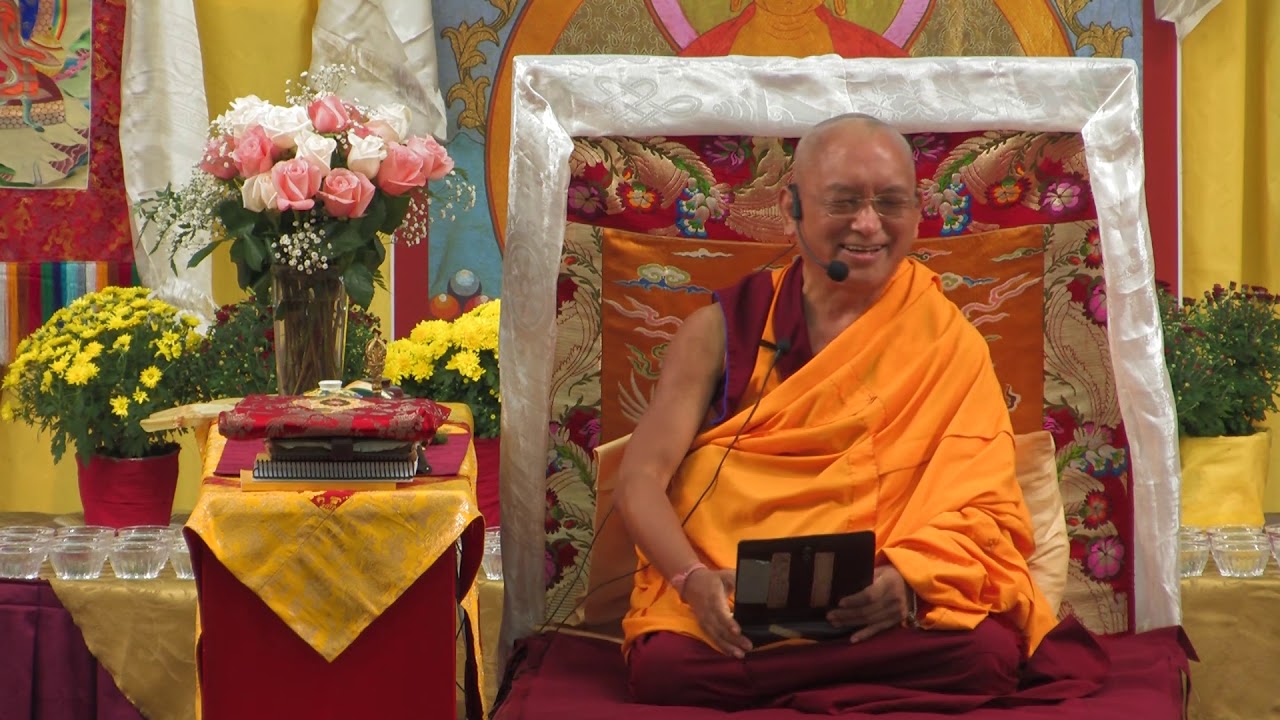
20090912 S3 LZR LOP A funny thing about ignorance ENGLISH
Holiness the Dalai Lama and Daniel Goleman on emotions, and they have a discussion about anger and all the various different ways that we can work with it in a positive way. They presented something and I'd like you to comment on it. They talk about the ability to look at the actor and the action and to speak to the anger as the action and with compassion....
Rinpoche: Look at the anger as action? Well, look at the actor with compassion and address the object of the anger, which might be a behavior that has appeared, and to be able to work with the two like that. Rinpoche: The last one, I didn't understand.
Yes? Rinpoche: The last one I didn't get. Can you repeat? Um. Ah, let's see. Well, let's say I feel uncomfortable in a situation, right. Now I know that the uncomfortable feeling is merely labeled by my mind. I'm labeling it "uncomfortable," because I've had past experiences that feel that way. So now how do I look at this merely labeled uncomfortable and address it with kindness and warmth, generosity and um, instead of just, I mean, maybe, I mean, would it be, are you advising us to just dissolve it into emptiness or can I do something special with it, like nurture it a little bit in a way that allows it to, for example, when I first attended your teachings after my first retreat, I went home and I learned how to clean my house completely
differently. And it was great, right, I took, that one was way I did it, so when I get frustrated I would go clean the whole kitchen or, but that's just working with myself. But if I'm with somebody else and I'm having a conversation and, yeah, there's a question, I don't know how to answer it, Rinpoche, why I'm....
I mean, anyways, I thought maybe you have some ideas. Rinpoche: I didn't get quite clear. Sorry. Can you express? Somebody express? I think maybe, Rinpoche, how do we use emptiness in terms of, the understanding of emptiness in resolving our anger? How can we see the situation in emptiness to stop our anger?
Yeah, in the moment, when it happens, you're in the moment.... Rinpoche: How to stop the anger in emptiness? How to use our understanding of emptiness in dealing with our own anger, to prevent our own anger. Rinpoche: Relating to the anger? The emptiness of the object.
Rinpoche: How to meditate on emptiness when you get angry? Is that the one? That's what I understood you were saying. Is that, did you ask that question or something else? Okay. Well, there's an example in the book that His Holiness the Dalai Lama used.
He said that when he was much younger he had a very small dog and the dog used to, he had a physician came by, a physician, a doctor came because the dog was sick. And the doctor gave the dog a shot, and the dog got better, but every time the doctor came to visit His Holiness, the dog was scared of the doctor.
Rinpoche: The dog did get better afterwards? Yes. Rinpoche: But the dog get scared when, each time when he sees the doctor. Yes, because he remembered the shot. Rinpoche: Yes, okay. Then? So he would growl and bark at the doctor every time he came, so well, let's pretend that I'm like the little dog.
And I decide to bark and growl because I'm uncomfortable. Rinpoche: Yeah, you meet the doctor and you find uncomfortable. Yeah, the doctor's come. Okay, I'm going back to the doctor, to get my appendix out and I don't want to go through that again because the anesthesia's pretty rough, so I'm looking at that and thinking, Okay, how do I change this relationship, I mean, it's karma, I mean, if I'm giving, if I'm understanding your teachings, there's causes, there are conditions and there's an effect, but there's also this merely labeled human being here, Julie, who would like to participate in that in a way that can contribute meaningfully to produce an effective result, preferably not harming anybody, right?
Rinpoche: So, you want to have a good relationship with the doctor? Julie: Sure. That would be a good starting place. That would be great, yes. Rinpoche: So, to not get angry to the doctor? To not get upset with the doctor, right? To not get upset with the doctor when you meet that doctor?
Is that right? Or? Julie: Okay, let me ask it a different way. Sometimes I watch scary movies, okay, like I'll be watching, and I don't even watch violent, I mean, I just watch ordinary movies but they might have someone that jumps out of the scene. Like a was watching this movie The Golden Compass last week, and there is somebody who kidnapped these kinds, right. And I jumped, I mean I just have this startle response.
It comes out of nowhere, and I.... And then my husband looks at me and he sits there and goes, Why do you do that? And I'm like, I don't know why I do that. Do you want me to figure out another example? Do you want more? Would you like more, Rinpoche?
More examples? How to transform anger or the response to that startle response, I don't know, we call it anger. It's a feeling, the feeling is real, it's there on the aggregates, it's one of the aggregates. Rinpoche: But this last one you mentioned, is there anger?
Or just shocked? Julie: Just shock. Rinpoche: Just shocked or anger? Julie: Um, it's shock because it hasn't been labeled anger. Rinpoche: Uh? Julie: It's shock because I didn't label it anger. Rinpoche: I see. It's shock because you didn't label it anger.
Julie: Well, I don't know. I mean, I just, you know.... Rinpoche: Did you ever read in the teachings on patience? Did you ever read any meditation techniques on patience? Julie: Ah, yes. Rinpoche: You have read? Julie: Yes. Rinpoche: Okay. Did you use?
Julie: Um. Well, personally, Rinpoche, I find that it's better to meditate on grace. Rinpoche: Better to meditate on...? Julie: Grace. It's like, what is it? Ah lay. Blessing? Grace? Oh! To be graceful. To be kind. Grace of the person? To be kind. Like Geshe-la, Geshe Sopa says, whatever you do, just be kind.
Whatever...? Whatever you do, just be kind. Yes, be kind. Yeah, be kind. Grace, with some skill that, some softness and warmth and appreciation. Rinpoche: So, I mean while you're telling lie to the person, be kind. While you're telling lie, you're kind to that person?
Or you're killing that person, but you're kind? You tell lie to that person, you're cheating that person, at the same time being kind? Julie: Well, you know, it's a very interesting question. That's a very interesting perspective, Rinpoche. Rinpoche: What? Julie: If you're telling lies and cheating, let's see, what did you say?
You're telling lies...? Rinpoche: At the same time being kind. Julie: Yeah, at the same time being kind. Um. It's a very interesting perspective. My grandmother was an expert at that. She had lots of friends and she helped many people and she died at an old age without regrets and she lived well, so maybe, I don't know.
So it's interesting perspective. Of course, you know, I take precepts not to tell lies. Rinpoche: Very good. Yeah, that's the best.
I think it depends on the situation, I think many situations, I think, in many situations if you accept that person's happiness, rather fighting for your own happiness, you accept that person's, you offer, I mean, you accept that person's happiness rather resisting that person's happiness and rather cherishing your happiness and fighting for that, you think that other person's more important than you and cherish that person and cherish that person's happiness, then anger, there's no place for anger to rise in your mind.
So many situations like that. So this, yeah, the, as I mentioned the other day, morning motivation, the second one I mentioned, the Kadampa Geshe what I explained, I the root of the karma, root of the negative karma, but however, and the root of the, from where all the suffering comes, so this is a phenomena to be let go, to be thrown away far.
Then others are originator of enlightenment, so this person is originator, from whom I receive enlightenment, this person is originator of my enlightenment, from whom I receive my enlightenment. Or the even more extensive then, one's own past happiness, all the numberless past happiness, present happiness, all the future happiness, all the happiness of future lives, liberation from samsara, enlightenment. So every single tiny happiness, originator of that.
Even the comfort in general, or even when you feel hot, even as cool air pass through you feel comfortable, even like that, including everything, received from this person. So this is originator of all my happiness. So, then you, so without any question, without a doubt, without hts, without any doubt, question, instantly cherish, so it's a phenomena to immediately to take it, to cherish, to cherish and to obtain happiness for that, other person.
So, I think, that bodhichitta technique is, that, letting go I, cherishing others, I think that's, wow, that is just unbelievable. That's just, it helps to actualize bodhichitta and itself becomes patience. When you think of that impossible to get angry.
Impossible. Impossible. So this becomes the most precious, most precious, kindest, dearest one in your life. Even more precious than Buddha, Dharma, Sangha. By the, not by the quality but by the kindness. So Buddha came from this sentient being, practiced compassion to the sentient beings, and then generated bodhichitta and then entered in the path, then the true path, path of merit, preparatory path, the Mahayana, those two paths, and then the exalted path, the right-seeing path, meditation, no more learning, so achieved, so cease all the defilements in that way, gross, subtle defilements and then completed the whole path, achieved enlightenment.
So Buddha, Guru Shakyamuni Buddha, became enlightened by the kindness of this person. So, yeah, by developing, by meditating on compassion to this person. So whom I pray, whom you pray every day, every time when you begin a practice, Sang gya chho dang tshog kyi chhog nam la, so all your, whatever practice you do, you always begin with the refuge, totally rely on Buddha, Dharma, Sangha, Buddha, so yeah, so Buddha, Dharma, Sangha, for example, Guru Shakyamuni Buddha?did like this, so the numberless buddhas like that, enlightened by the kindness of this person.
So then Dharma, Sangha came from this person. So this is the, wow, can't imagine, it's the most, the most wish-fulfilling for your, your most wish-fulfilling. _______, the?highest. Yeah, like that. So this reasoning very extensive, very deep, very extensive and it help by the way for patience, to not get angry.
All this, to cause to, I mean, there's no way, impossible to get angry, I mean, just, even the slightest harm, impossible, when you think of that. Only to cherish and only to obtain, only to, even a little service, whatever you can offer, for you it's incredible lucky, so fortunate.
Unbelievable, so fortunate. So the, I mean, like that. So it's, yeah, hts so it helps for bodhichitta, to actualize bodhichitta, so and the patience, to not get angry, patience, comes by the way. So this is the most amazing, yeah, thing. Then this makes you to not, to not get angry, not only that, but really makes to think what I can help, so that is what this sentient being, what this person needs, have been suffering in samsara from beginningless rebirth, being under the control of karma and delusion.
have been suffering from beginningless rebirth. So now, so you need to liberate that person from being under the control of karma and delusion, that, so you need to reveal, you need to reveal the path, so you need hts, you need to reveal the path, Dharma, and then the person can hts understand and practice and actualize the path and then overcome the karma and delusion.
Then you're able to liberate. And not only that, and then, by revealing the path to enlightenment, then, so bodhichitta, so forth, then you're able to bring that person to enlightenment. So then here you come to know, so what's the most beneficial thing, it's yourself to learn Dharma, so practice Dharma, to learn Dharma, to practice Dharma, so that means to meditate on lam-rim.
Whether you're learning Buddhism like sky, whether you're learning Buddhism this much, but most important is to practice Dharma, to focus the life on bodhichitta, focus life on bodhichitta in this life to have realization of bodhichitta, the lam-rim realization, this, especially bodhichitta.
so achieve enlightenment, so gives possibility to achieve enlightenment, so then if you put the aim in this life, to achieve realization of bodhichitta, put all the effort in that, then, yeah, goal is to achieve enlightenment. Then you're able to do perfect work towards sentient beings, help this, to be able to help this person, and so, guide. As well as numberless sentient beings.
So like that, so you think very, what you want to help, what need, the sentient beings need help, then you see very deep and then what they need help is something very deep, generating the path to enlightenment, and especially bodhichitta. So that, comes conclusion that, to basically help to the sentient beings, okay. So like that./ Then,
this might be also useful Dug ngal thra mo....jin gyi lob: Not desiring even a smallest suffering, And no satisfaction for the happiness. How much happiness you get, but no satisfaction, you never can see enough, so always wanting more and more. So, no satisfaction towards the happiness.
In that case, there's no differences between you and others. Myself and others, there's no differences. Please grant me blessings to generate that my mind become happy when others happy. Say, reason, because of that, Dag dang zhan la khya par yo min zhe, so this is same, yourself is that, and other sentient beings, like that, not desiring even for smallest suffering, then, no satisfaction to the happiness, then, please bless me to generate, or your mind to feel happy when other sentient beings happy, to like, your mind to like others' happiness. Zhan de ga wa kye par jin gyi lob, to grant blessings, your mind to like when others happy, others to have happiness.
So I think that's, so that also helps, when you're happy, when your mind transform into dislike others happy, so like others happy, to?have happiness to others. So the, many times in our daily life, many cases, so this is good, you accept the other person's happiness, let, you give up the self-cherishing thought, seeking happiness for the self, then, offer the happiness to the other person, accept the other person's happiness, so then, it brings, it makes the other person happy and makes you happy.
When the other person's happy, the other person's happy with you, and you're happy. So it has that, it has that side. When you accept that, then you offer happiness to the other person, then that person become happy with you, and then you're happy, so like that.
So it's a circle, then also it has effect to the other person, positive, happiness, so like that. So, when you don't do that, when you don't do this positive, when you don't do this, so when you follow the self-cherishing thought, when you fight, you try to, clinging to the I, and then the, cherishing the I, then, to achieve the happiness for this, fight for this, then kind of give up the other person's happiness, in other words, cherish the I, renounce others, renounce the other person, so anyway basically that, this is the same, when you do that then also careless, give up the other person's happiness, then, of course, anger rises to that person.
When you do that, when the attitude become like this, opposite to bodhichitta, then you're not in a good state, your mind's not good, your life's not in the holiday, your mind is not in holiday, your life's not in holiday, vacation, vacation or the holiday, really in happiness, peace, so you put yourself in trouble.
So anyway, then anger comes, and jealous mind comes, all those other delusions, the other wrong concepts, all these bunch of emotional mind rises, mental sicknesses, anger rises, then your actions become violent, harm to the other being, then that makes the other person get angry, it brings unhappiness to the other person, makes the other person get angry, and then it causes the other person, other sentient being, to create negative karma, you cause other sentient beings to create negative karma.
You create negative karma, and you cause other sentient beings negative karma, then both go to the lower realm, both, then that makes both go back to the, go back to resident home, the lower realms, resident home, the resident home, do you understand?
Okay, resident home, resident?of lower realms, so that. So then continuously suffer in samsara, continuously, and then finished by that, no. Even you're born in lower realm, finished by that suffering, no. Then again there's negative imprint, left, then, there's negative imprint, then also you suffer, that, creating result similar to the cause, you do again in the future lives.
Even you're born human being, then you do the same thing again, the past life connection whatever you made, when you meet in the future life, some time, even in human realm, then you do the same thing again. What happened in the past life, then you, continuation of that, you do again, harming each other, so like that.
So this goes, so creating result similar to the cause, this complete negative karma has four suffering results: rebirth in the lower realm, experiencing the result similar to the cause, then the, the three others you experience in the human realm: possessed result, to do with the place, many other problems to do with the place, depending on the negative karma, so, what kind of problems, so either very dangerous, being in the place very dangerous for life, or many sicknesses, or very harmful, or place which is harmful for the life, things like that, or where there's a lot of famine, no water, drought, all this, so place like that, possessed result, and problem to do with the place.
Then experiencing the result similar to the cause. You experience, how you treat the person, the sentient being in the past, then, in this life, after some time human life, then you experience, you're treated, so how you treated in the past, then you get treated by the other sentient beings, like that, experience result similar to the cause.
So abused by that person or whatever, however you treated in the past, harm, then, you get treated like that, experiencing the result similar to the cause. Then creating the result similar to the cause, then you do again, the same action you're doing again, same harm you're doing again, so from negative imprint, goes on.
Then again that leaves negative imprint back on the mind, then again you do the same thing in the future. So like that, it goes on and on, it goes on and on, without, if you don't purify negative karma, if you don't purify negative karma, if you don't actualize the path, remove the karma, then, if you don't purify, then, negative karma, then goes on like that, then it goes on, from one complete negative karma, like this result goes on, without end, goes on and on without end.
So from one negative karma, the result suffering, it's endless, the result suffering is endless. So this is the most terrifying, this is the most terrifying than hell suffering. is, when you finish experiencing, then it finishes. But this one, creating the result similar to the cause, leaving negative imprint on the mind, then you experience that, then you do it again, creating result similar to the cause again, you see, so goes endless.
So therefore, the karma, karma is, the negative imprint left on the mind by the karma is most terrifying, than the actual hell suffering itself. If you think of the evolution, it goes on, causes endless suffering of samsara, from one, that negative karma, so this is so much more terrifying, so like that.
So here,
so this, very important to remember this. In the Do De Le Gye Pa, this is very, very good, very important, something like that, Do De Le Gye Pa, one of the Buddha's extensive teachings on the karma, The Hundreds of Karma of the Sutra, so there it says, the non-virtuous action always, always habituated,, and becomes familiar, I think.
You got the idea. So this is how it has been in the past. Then, also in the future, then, also in the future, then you, also in the future you depend on non-virtue, you depend on that, then you engage in that. But my mind is, the last one not too clear.
So there are three things like that. You, also in the future, depend on, do again, again depend on non-virtue, then engage in that. So this goes on, because habituated from the past, then goes on like this. So need to change from that, so this gives, this has very, this is something we have to remember all the time.
You see you are, so suddenly you're engaged in negative karma, that have been habituated in the past, suddenly you see you are engaged in that. Then remember this, that means you'll be doing this many times in this life, become more and more habituated.
Already habituated from beginningless rebirth, that's why you never become free from samsara, so then if we're doing the same thing again and again even this life, then future lives, that effects the future lives, all your future lives it effects, you'll do again and again, because habituation, you do again, so you get, your life, you get under the control of that karma, whether it's stealing, whether it's sexual misconduct, whether it's telling lie, whether it's killing, whatever it is, so, in all the future lives, So you're not free, you're always under the control of that, it is not under your control.
You're under the control of that. So I mentioned your future lives, then very difficult, then constantly suffer, endlessly suffer in samsara, so become like that. Then it makes it very difficult to practice future lives, to abandon negative karma, very difficult to practice, so like that.
So this life, while you have, this life, while you have all the opportunities, this life is almost, it's the only one where you can change, this life is almost only one that you can change, your attitude and action, then, make familiar with Dharma, familiar with good karma, like the five morality, upasika, then all the ten virtues, however, the, so the good karma, Dharma, the realizations, the Three Principal Paths, the foundation of tantra, and tantra, mind to become familiar with this, so to become more distant from negative karma, so this is almost, this is the only one, this is the only one, this is, almost this is the only one, you have all the opportunity to change.
If it doesn't get done in this life, doesn't get done in this life, then extremely difficult, when the opportunity will come? So that's very, very important to remember. So that's very, very important to remember. So, almost this is the only chance you have.
So, so if one follows the self-cherishing thought, do not accept the other person, say, no cherishing, do not accept the other person's happiness, don't offer, then, all the negative emotional thought arises, then your actions changes, actions of body, speech, and mind changes, violence, negative, toward the other person, then, other person get angry, then other person, all that.
Then the other person create negative karma, say, then all the other person's manner of the action change from peaceful then wrathful, violence, then you get angry, that you made, you caused, to the other, then, without knowing that, then again you get angry, so it's a circle.
You start with a negative mind, negative action, result, harm, then other get angry, upset, all that, then it effects to you, so it goes circle like that. Then all the effect, all the sufferings of the lower realms, then all the effect, in the, even in the human realm in the future, negative effect continuously each other, so goes on, endless, so like that.
So this gives an overall view of negative karma, the effect of negative karma, so like that. So of course you don't want to suffer, of course you don't want suffering, you want happiness, so change. So I think many times, this will be very good, I think it's, so you change, wow, then only happiness to the other person, then you get happiness, then, like this, then only positive imprint, positive, you enjoy the, result you enjoy from life to life, the positive imprint, the good karma, you enjoy from life to life, opposite to the other one, you enjoy from life to life, so like that.
It doesn't become obstacle to enlightenment, doesn't become obstacle to achieve liberation from samsara, it doesn't become obstacle to achieve enlightenment, then only supporting you, wow. So amazing, amazing, amazing. So there is Kadampa geshe, in the lojong texts, I think, I don't remember, there are six methods to practice patience that are mentioned there.
Do you remember? Anybody remember? Huh? What? Yes, that's right, yes. Yes, that's right. So the, practicing patience, in the manner of the guru-disciple, as yourself disciple, other one's guru, in the manner of guru-disciple practice patience. Then as, mother looking at it, looking at it mother, but the mother who become crazy, so that, your mother who become crazy, you only have compassion to that, you don't get angry to that, so like that.
So the person, possessed by the spirit, possessed by spirit, or demon, demon of delusion, possessed by demon of delusion. So mother who possessed by spirit, spirit, no control herself at all, totally she is used by these spirits, no control at all. So it's only, wow, then it's only object, impossible to get angry, it's only object of compassion.
She has no control at all, she's totally possessed by spirit. So now here, the mother, here, this sentient being, so looking at like that, looking at this sentient being like this, mother who possessed by the spirit or the demon, the delusions, totally used by the delusions, completely, no freedom at all, so it's purely, only object of compassion, like that.
So that's one technique. Then the, there's another one. What is the other one? Yeah, that's right. So I thought there were six, but that's three, or four. meditate on patience like, by putting target, then you shoot arrow, like in that manner. So, of course, so there is a reason for that, there is a reason for that.
This is very good, this is a very good one because you put the target upon yourself, you give, put the target to receive the other sentient beings to harm to you, you put the target, you made yourself target, you put the target, you made the target, to be harmed by others, you did it, so that. Because in the past, you harmed that person, you treated like that, that person, whether it's abuse, or different abuse, I mean, sexual abuse, whatever, whatever it is, you treated them, in the first place, you treated that person like that, in the past.
So that's, you made the target. So of course, your karma, so you create the karma so, of course it's a result to receive harm from others. So you create karma, you made the target, the result, you receive harm from others, that's the result. By harming others, then you receive harm from others.
By harming others, so you receive the, by harming others, then you, as a result, you receive harm from others. By benefiting others, by helping others, by benefiting others, you receive the result, help from others. So that's karma, that's how, the nature of karma, how the cause and result, how it works, inside that.
So two, two totally different evolution. Whatever, every single help, benefit you did, to others, then result only positive, only you receive help from others. So every single negative karma, harm, harming others, you did others, not only human being, any other sentient being, insects, then result, you receive harm from others.
So, that's the nature of karma, it works like that. So, whether you believe or not, it works like that. So, whether you believe or not, the fire, if the fire is there it can burn things; or water makes wet, so whether you believe or not it's the nature of the phenomena.
So, like that. So, the karma is, not only for people who believe in the karma, only people who believe in karma, there's karma; who don't believe in karma, there's no karma, not like that. That becomes very strange. Then there's no hope, there's no hope for the people, then the people who don't have belief, nothing they can do.
There is suffering, there is suffering, there is suffering, so, nothing they can do with their suffering, so it becomes truly existent, or permanent, nothing they can do, Either it become truly existent or whether it's permanent, truly existent, so, that. Or, either there's no suffering, but it is not true.
Many times you don't believe you have suffering, you don't believe you're suffering, but actually you have suffering. So many times there's sick, you have the sicknesses, but you believe you don't have that sicknesses, unless the doctor tells you, then you believe.
Then sometimes doctor tells you have cancer, but some doctor tells you, you have cancer, but then you check with some doctor, can't find cancer, so anyway, so it's all like that. So, anyway, so it's not up to believing. Anyway, there are many people, you don't believe you have cancer, but then if you go to check, then the doctor, then, tells you, you have cancer, that's one, just one example, but there are many.
So much of the suffering they don't understand, they don't know, they don't realize that, they don't know, they have no idea. But they have, they're experiencing in that, but they do not?have knowledge. Like maybe even suffering of pain, sometimes even I mentioned already, so then, suffering of change, they do not understand, and then, pervasive compounding suffering, no idea, but they experience, they?into that, that's why they, so, because they have pervasive compounding suffering, so that's why they experience the suffering of pain.
Where the suffering of pain comes from is from that, and as well as suffering of change. So why they never get satisfaction in happiness, these samsaric pleasures, they never get satisfaction, always after some time they get bored, because that's suffering of change, but they do not realize that is suffering.
So, anyway, like that. So then, you put the target, by harming that, you harmed that being, that person before, in the past, so you created, this person harming you means you have harmed to that person in the past, so you created the target, so that's why you receive harm.
So then by knowing that, by remembering that, then you don't get angry back. And you don't retaliate back. I mentioned yesterday or the day before yesterday, so, now here again comes, when I was going through what? I don't remember now, I've forgotten.
I was going through something then I mentioned, maybe the spank? So I said, remember this, I mentioned that. So, same here, so you don't practice patience, Oh, this person give me spank or whatever did, so you don't practice this, this is because, then you think of the reason, there's always a reason when somebody gives harm to you, when you're driving, while you are walking in the road, the person you never met in this life, that person shot from somewhere, shot you, there's a reason for that.
And the minute when you met that person, first, either you don't like that person, or you hate that person somehow, this is the first time to meet but there's no story in this life, but, the minute when you see, you hate. And that person also, somebody, the minute when that person see you, that person hate you, there is like this.
But you never met this person before. Just that in the road?which?meet. So there's a reason for that, past life. So then, by thinking that, then you don't get angry, you don't harm back, otherwise you're creating target again, if you get angry, if you're angry and harm, you're creating the target again to receive harm in the future from them, continuously. So the wise, so the wise, the wise thing is, by knowing this then you stop anger, so you practice patience, you stop anger, retaliating back. So that's a wise thing.
So that's very, very, very, that's, that is a very, very, very basic Buddhism. Very, very, very, very, very, very, very, actually, I should repeat it ten times: very, very, very, very, very, basic Buddhism, about karma, So this way, the other way, negative way, then creates a grudge, garage? Not car garage, but grudge, your heart and the other person, whole life, many years, whole life, enemy.
So that, that, only harm each other, doesn't bring peace, you can't bring world peace, you can't bring peace to this person, how can you bring peace in the world? If you can't bring peace to this person, you can't bring peace to the world. So generally speaking, like that.
So the, if you want to bring peace in the world you should bring peace to this person, what, this is what I want to say. If you want to bring, if you care about the world peace, you should bring peace to this person. Then you can bring peace in the world.
Otherwise just, world peace is just lip, just between lips, just that, like that, just nice words. So, so the other one is positive, the other one, Dharma, Dharma, the solution, the person thinking in karma, wow, then suddenly your heart's opened, not blocked, there's peace in your heart, peace in the other person's heart, so you're able to bring peace to this person, so this is how you bring peace to one person, two people, three people, four people, then bring peace to the world.
So, of course, so the, I don't remember exactly the word, but, a long time ago, I didn't see about the practicing patience, say, I think it must be the, by meditating on emptiness. However, the basic thing is that, this is a hallucinated world, this is a hallucinated world, illusioned world, hallucinated world, this, if you look for, if you look for can't find the real I.
as I mentioned the other morning, yesterday morning, so nothing here, body, mind: the aggregates of form is not the I, and feeling, cognition, compounding aggregates, aggregates of consciousness, nothing of this is I, the I, could not find, the real I could not find, that is appeared to you, which you have been believing, what you have been believing, got used to believe, 100% true, from, not only from this morning, from beginningless, not only from this morning, not only from birth, from beginningless rebirth, but it's not there, could not find, when you look for can't find, nothing of this, even the whole group is not that, could not find from the tip of the hairs down to the toes, nowhere you can find.
I mentioned already, what the, I which exists is merely labeled one, but even that you can't find, if you look for it, you can't find, even on these aggregates, you can't find. So the, say, the Rang gyu pa (Svatantrika) I mean, all others, probably all others, I would guess all other schools, the four schools of Buddhist philosophers, Rang gyu pa, then the I should be found on the aggregates.
So therefore, they say that it is not truly existent, but it exists from its own side, because you can find on these aggregates, foundable. But in the Prasangika school, it's unfoundable. So the reality, the very nature, the reality, you can't find, even that one, if you look for, can't find, even what exists, could not find on this base.
So, therefore, how you can find the real I appeared to you, that you've been believing from this morning, and from birth, from beginningless rebirth, 100%, 100% it's true, without any question, complete, totally hold on to, so look for, can't find. So even what exists, can't find, even this.
So then how the false I, how you can find, false I, it's not there, it doesn't exist at all, anywhere, anywhere, can't find anywhere, neither you can find on this, nor anywhere, okay. So, that, totally, totally non-existent. So this the Fifth Dalai Lama mentioned that,.
That's a very good one, good example. That is good, another quotation I mention now, here, that is another quotation where you can meditate on emptiness. In the daily life, one, different teachings, how you can use to meditate on emptiness, so something short.
This is another one, normally I suggest, so each day you can meditate on different techniques, different quotations, I mean that's just a general idea, but I mean, of course, I mean, that's just, not, not to miss completely the meditation on emptiness every day, to not miss at all, just to get some preparation to, plant seed, become preparation to realize, to come near to realization.
And then to achieve right-seeing path, or the wisdom directly perceiving emptiness, then can directly cease the delusions, and then with bodhichitta can cease the subtle defilements, so to achieve enlightenment to benefit for, to be able to enlighten all sentient beings, so to use the different techniques.
So, I mean, it doesn't have to be only one, but, of course you can use, I?guess more, but I'm just saying, with different technique, quotations, to use-today this, tomorrow that-but I mean of course you can do more. But just general idea, somebody who do not have much time, or do not meditate much, so I'm suggesting this.
So this is now one good one.?Di muk, ignorance, mukpa tukpo is darkness, heavy darkness, rab rib, it seems rab rib is, seems used for the object, but I think the rab rib is the defective view. You know, when you put the eye drops, when you go to eye doctor, and then, first you put the eye drops, and then after, you have kind of a, what do you call, what do you call that one?
Makes a little bit, after you put the eye, when you go to eye doctor, huh? Blurry, yeah, blurry. So blurry. So, defective view, rab rib, that's what I think, defective view. Not so much the hts, the view. Defective view, so how I translate is that. Sometimes can be use as the object, anyway, defective view, rab rib.
So, ra gyi, so with this, with ignorance, which has this defective view, then the example, the darkness, darkness, mukpo tukpo, heavy darkness. So in such a time, dark, dark time, then in the road there's a rope, curled, so, that is example for the body and mind, the aggregates, lu sem, body and mind.
The nang su la is the way of appearing, the body and mind, like the piece of rope, the way it's curled. So the then the label I,?like this. Then, so it's like this, so the curled rope, then you label, because it appeared like that, those, so then you label, a snake, the terrifying snake, okay. Then, so, reality, first you see this curled rope, and the way it's curled, the color, then how it looks, then the mind merely imputed, mind merely imputed snake, mind merely imputed the snake, merely imputed snake.
Then, right after, with the belief, with the belief. You don't believe, then maybe that doesn't happen, but with the right after that second then, the mere imputation, right after that second, then appearance of the snake comes. But it should be merely labeled appearance; the appearance of snake should be merely labeled appearance, but, of course that doesn't happen to us until we achieve enlightenment.
That appearance, we have hallucination, we have hallucination, hallucinated appearance, so we have that until we achieve enlightenment, except in the equipoise, when our mind is in equipoise meditation, when we achieve exalted path, we have wisdom directly perceiving emptiness, in equipoise meditation, that time we don't have hallucination, mind doesn't have truly existent appearance, we don't have.
Otherwise, when you arise from that, you have the hallucination, until you remove the subtle negative imprint left by delusion, concept of true existence. So, like that. So, therefore, so, the, actually merely labeled, your mind just merely imputed the terrifying snake, merely imputed, but you're not aware, but you're not aware, the next second, it appeared, also, not only you're not aware, merely imputed by your mind, not only you're not aware of that.
Then, what is merely imputed then next second it appeared not merely labeled by mind, not merely labeled by mind, that's what appears, so totally false, totally false. A snake not merely labeled by mind that appears. So, appears. Why it appear like that?
There's a cause for that. So it's not happening without cause and conditions, not like that, that's impossible, that doesn't happen. So, it appears, because, why it appears? Because it is projected, right after your mere imputation, merely imputed snake, merely imputed snake, on that, the next second then the negative imprint left on the mental continuum by the past ignorance, concept of true existence, then projected, project the true existence, project true existence. So that's why you have this totally false, you have this truly existent snake, truly existent snake appears. You have this view, this hallucination. So then, very terrifying.
Then similar, so that is similar to the, like that is example, so here, you understand, this real, by using ordinary language, you real for the object to be refuted. So this snake exists from its own side, not merely labeled by mind, it's totally, what is projected there, project there is totally false, hallucination, totally false, it doesn't exist there, even an atom, that's totally, completely non-existent.
So of course, here, so now that's the example. So, now, here, so not the real meaning, that's an example to understand this. Then one label "I" on the body and mind, the aggregates, the mind merely imputed 'I,' mind merely imputed I, and then right after the mere imputation then, same, the negative imprint left by the past ignorance on the mind immediately project, decorate the true existence, decorates the true existence there.
Right after the second mere imputation I, then that decoration's done that. Then, that's how the I is, the next second I is appeared to you something real, or existing from its own side, so like that, existing from its own side, like that, rea al I. So, then hold onto that.
So, holding on this, the terrifying snake appeared, the you hold onto this, really true, this is really, 100%, this is really true, then get scared, you get frightened, scared, you can't touch, you're afraid to touch. So anyway, okay, so now here, oh, this I, real I, existing from its own side, so this, not merely labeled by the mind, then grasping, hold onto this, 100% oh, no questions, really exists, true, wow, wow, 100%, cling, true, so, so like that.
So, then the next one, then what result happens, then by believing this is a real snake, then the fear, from that then fear comes, believing there's a real snake, then fear comes from that. So then, then like that, then, so believing this is real, holding on this is really true, this is real I not merely labeled by mind, not slightest question, oh, then that time ignorance is created, the root of samsara.
Then from that, there's also the other delusions arise, the three poisonous minds, ignorance not knowing Dharma and not knowing karma, all this, so, then motivate karma, then leave imprint on the mind, mental continuum, then, so that produce, that throws the future rebirth, so then, so for example, this rebirth, these aggregates so produced by the past karma and delusions, so like that.
Three delusions and two actions, then, these seven results,?she dun. I don't remember that one, ____ dun, so that's seven results, so there's seven to be, so what experiences. So that's the result of the three delusions and two actions. So, in the past the three delusions: ignorance, the grasping true existence, the root of samsara; then the craving and grasping, just before the death, whatever the life before, then the craving and grasping of this human being's 12 dependent related limbs,?ten drel ____ la chu nyi, so craving and grasping.
So, well, the attachment, the second one is stronger, that, desiring for this rebirth. So the, then seven results, the consciousness, the result time consciousness conceived in the mother's womb; then there's, then, name and form; then six sense bases, kye che drug, that's another one, six sense bases, so, rising door or something.
Anyway, six sense bases, then after that contact and feeling, then the rebirth, this rebirth, then there's old age and death, that comes together. So, did I miss anything? Did I miss, did I leave out anything? I'm not sure. Anyway, that's very easy to leave out something, so seven results.
So the three delusions, two causes, two actions, then seven. So the, actualized, except what didn't happen yet is the death. So old age started from the womb, right after birth, actual reality, or reality old age, after birth, old age started. But what common people in the world, worldly people in the world count is when you have wrinkles, or when you have white hairs, and, change, then old, old by age; physically young, and by age, old.
Anyway, I'm joking. So anyway, so the, what I'm saying. So caused by karma and delusions, these aggregates caused by karma and delusions, so pervaded by, how this is pervaded suffering, in the nature of suffering, that. What I was going to say, something?
Oh, yeah, so, there's great fear of the three types of suffering. So, it happens in a circle. One receives, maybe one receives, _____ kor, or so you, by circling in samsara, you experience all these sufferings like this, could be also like that. So,?kor?tell exactly.
So, pervasive suffering like this, the contaminated seed of delusion, I mentioned already this, so that's another pervaded by suffering, another meaning. Then from this, then suffering of change, samsaric pleasures, suffering of change, happened, then the suffering of pain comes, like that, it's one continuous, so this is how we have been suffering from beginningless rebirth up to now.
So if you do not realize emptiness in this life, if you don't do something, if we don't eliminate this ignorance, then we will continuously suffer, endlessly suffer in samsara. So that means you can't liberate, you cannot do perfect work towards other sentient beings, liberate from the oceans of samsaric suffering and bring them to enlightenment, you can't do that.
Neither that, nor yourself achieve liberation from samsara, then constantly suffer, without end. So therefore, we need, I mean, understanding this is one thing, but I think for us we need to meditate, we need to meditate very much into lower realm sufferings and sufferings of the deva, human realms, those, each realm's sufferings, and general sufferings, I think so important to meditate on that to really discover, not just learn the words, but really discover, really to feel in the heart.
Like in the Lamp of the Path to Enlightenment, I mean, in Light of the Path to Enlightenment, it's mentioned that, from the the lowest hot hell, most unbearable suffering, from there up to form realm, formless realm, so the whole entire samsara you see like being in the fire, whole thing's like so unbearable, so like being, like you're being in the center of the fire.
So how you feel that? How you feel, you want to be free, so scary, so unbearable, you want to be free from that this second. So like that to see the whole desire realm, form realm, formless realm, all the deva realm, not only human but deva realms, which has unbelievable, unbelievable, a hundred thousand, a million times much more greater sense pleasure, than, they have than us human beings, than the most developed country.
So devas, hundred thousand times, a million times, much more greater sense pleasure, so including that, then form, higher realm, form realm, then formless realm. So, you need to meditate really well, really to, until really, when you really realize, then you feel like that.
So then, then putting effort, and then to realize emptiness, all those, actualizing, able to generate compassion to others and actualize bodhichitta, all those things happen. So therefore, the renunciation becomes unbelievable, this, realizing how samsara is nature of suffering becomes very important foundation, so like that, become very, very essential foundation.
So what I'm saying? Yeah. So, now here, so all that, the very bottom is ignorance, it's kind of, some ways, it's kind of, it's really funny because the sufferings, can you imagine the sufferings? Most unbearable, general suffering of samsara, particular suffering.
Now the root, you go down to the root, oh, this concept, it's just your mind, just concept, just your own mind, this concept, this wrong way of thinking, it's just that, it's just the wrong way of thinking. So, while there's no such I, in reality, then this hallucination happened, believe, 100%, so you live whole your life, you live whole your life, for this I, which is not there.
Whole entire life, do everything for this, do everything for this I, happiness for this I, for the happiness of this I, that you believe is, without question, but in reality it's not there. In reality, you're holding the hallucination, hallucinated I, but it's not there, in reality it's not there, there's nothing to hold on to, there's nothing to hold on to.
From beginningless rebirth up to now there's nothing to hold on to, something real, nothing to hold on to, really in reality, so only this hallucination. So anyway, so this mistake, this way of thinking is, just this way of thinking, holding on to this, grasping, oh, everything came from there, can you imagine? All this, the hell, hungry ghost, animal, wow, can you imagine?
What suffering, what suffering, what suffering. Even the human beings' problems, woa, suffering. So anyway, it's amazing, but just the root, when you go down, this concept, mistaken concept, way of thinking. So it's really amazing. What, I think, Jeffrey Hopkins says, Jeffrey Hopkins, I saw in a book, Jeffrey Hopkins says, or I heard, Jeffrey Hopkins says, 'joke,' what he says, 'joke.'
Jeffrey Hopkins, you know, this talking about the ignorance, this is joke. So it's not true, there's no such thing, there's nothing there. There's no real I. I mean, another thing is, another story is, completely holding there's such a real I, appeared there, then you live whole your life for this happiness, for the happiness of this I, not the merely labeled happiness, not happiness for the merely labeled I, not that, but this real I, real I, existing from its own side, you understand? Which is not there.
You understand? So try to get education for this, kindergarten, school or college, university, and the marriage for this happiness, which is not there; this I, this real I, marriage for this I, happiness of the I, which is not there. To make children for the happiness of this I, which is not there, for the I that's inside the body, not there,?they have to make children for the happiness of this I, which is not there.
So everything, all the hard works, all the hard works, all the labor, all the hard works day and night, first of?learning, then everything is done, everything is done for the happiness of this I, for the happiness of this real I, independent I, can imagine, which is not there.
So like that. Then, so hts when, hts, when, then holding on this real, then attach to this I, then attached to this I, cherish this I, okay, which is not there. So when somebody says, or somebody criticize to this I, somebody criticize, but you don't think, criticizing the merely labeled I, you never think that, never think that, never.
That's almost impossible. But if you think of that, so good. That's fantastic, you never get angry. But that's the reality. But don't think, so this real I, so then get angry. Can you imagine? You believe somebody is criticizing to this real I, in the body, then because cherish, attachment, then get angry, then anger arises.
Then thinking to harm back, okay? Wow. If you have power, you kill millions of people in the world, if you have power, millions and billions, I mean millions, many millions of people, kill. See? So, for this I, believing inside this body, something like that, anyway. A real I, okay, the real I.
So can you imagine? So happened in this world so many times, historically, but the I which is not there, totally non-existent. So, anyway, then, putting people in court cases, there's no such I, but put people in the court case, or whatever, kill, smash, whatever, then all the ten non-virtuous actions for the happiness of this I, for the happiness of this real I, you engage in the ten non-virtuous actions.
Then, born in the lower realms, experience most unbearable suffering. Then experiencing, then experiencing most unbearable suffering, the most unimaginable suffering in the lower realms, so all this happened, all this happened because, to achieve happiness for this I, which is not there, which doesn't exist, then engage in killing, harming others, killing, stealing, sexual misconduct, telling lies, so all this, so can you imagine, the suffering what you have to experience, most unimaginable, most unimaginable, So we don't remember our past life experiences, lower realm sufferings.
And then all the sufferings in the human realm, we don't remember. We can't see all those, we don't have, neither omniscience nor even clairvoyance you can see, you can see the suffering, but we don't have, so that. So this is enough, wow, can't imagine the suffering one has to go through, believing, 100% believing, and then engaging in those ten, those non-virtuous actions.
Wow, what we have to go through, suffer. But the I is not there, it doesn't exist. Can you imagine? So like that. So, the way we go very down to the root, it comes out very funny, Don't you think it's funny? The root of samsara is very funny? No? Or is it very lovely?
Very charming? Anyway, so there's no such thing, there's no such thing. Well, frankly speaking, there's no such real I. It's totally non-existent, empty, right there, and the enemy, the enemy, real enemy, not merely labeled by mind, same, totally non-, it's hallucination, total non-existent right there.
If you look for, can't find the real enemy, total non-existent right there. So, that's it. Then the harm, real harm. It's just your concept, real harm, not merely labeled by mind, it's not there, totally empty, so, that's the last one, meditation on patience by meditating on emptiness, like that.
So I'll stop here, okay. I think, there's just one left out. So just one, a few is left, then stop there. Also when you go to sleep, it's also mentioned, "May all the sentient beings achieve dharmakaya." It's also mentioned, when you go, that. Remember, when you wake up, you remember that.
Then when you go to sleep, also, same. Then, practicing highest tantra, then you meditate on dharmakaya, then, mind abiding in the, ultimate reality, like space, like that. Or the, like that, yourself the deity, mandala, then guru, or with devotion, so meditating, so going to sleep like that, or, so going to sleep like that, or, I mean, with the generation stage.
But in general, as general, then, while you're doing tonglen meditation, while you're meditating on emptiness, or tonglen meditation, taking and giving, so with that, go to sleep. Or generate compassion to sentient beings, however, like that. Then, this I mentioned also in Vajrayogini, so, the, there is a mantra, when you go to sleep to recite, so: so: OM SIDDHI SIDDHI BUDDHA BUDDHA BODHE BODHE PALA PALA TISHTI TISHTI KAMPA KAMPA PARAGA GETSA GETSA BHAGAVATI MAPILAM BAHALE SVAHA
So you recite seven times, then you blow over the right palm. Then you put the palm here under the right cheek, like this, then in the snow lion position, without interruption another thought, another superstitious thought, then
Sign in to keep private, timed notes on this talk. Only you can see them.
Public comments
Public: open to everyone signed in. Your private notes are in My notes.
Sign in to join the discussion.
Teachings from Light of the Path 2009. Kadampa Center, Black Mountain, North Carolina, USA. Transcript: https://fpmt.box.com/v/LOP2009
- Teacher
- Lama Zopa Rinpoche
- Centre
- Kadampa Center
- Recorded
- 12 September 2009
- Length
